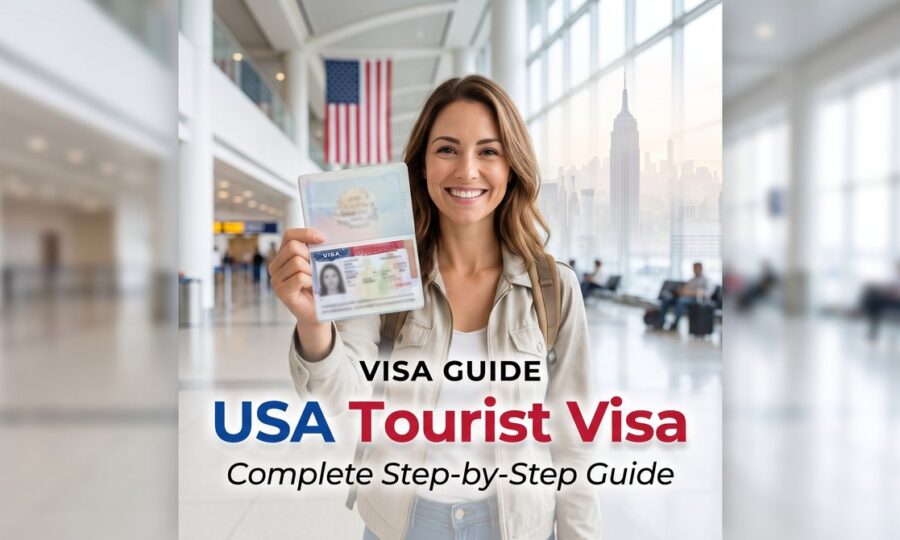
Dreaming of seeing New York’s skyline, driving California’s coast, or visiting family in the United States? For most travelers, the journey starts with one document: the USA tourist visa, officially called the B1/B2 visitor visa. This guide explains the whole process in simple English — what the visa is, who can apply, which documents you need, how much it costs, and exactly how to apply, step by step. Everything here follows the U.S. Department of State’s official process, and we will be honest with you from the start: no agent, website, or guide can guarantee you a visa. The decision belongs to a U.S. consular officer — but a correct, well-prepared application gives you your fair chance.
What Is the USA Tourist Visa (B1/B2)?
The B visa is a nonimmigrant visa — a temporary visa for people who want to enter the United States for a short stay and then return home. It comes in two types, and most applicants receive them combined as one B1/B2 visa printed in the passport:
- B-1 (business): attending meetings or conferences, negotiating contracts, consulting with business partners, or taking part in short-term training. It does not allow you to take a job or run a business in the U.S.
- B-2 (tourism): vacations, sightseeing, visiting friends and relatives, medical treatment, and taking part in unpaid social, sports, or amateur events. A short recreational course that gives no academic credit is also allowed.
A visitor visa does not allow you to work, study for a degree, perform paid work, or live in the United States permanently. It is only for temporary visits.
Two things confuse many beginners:
- Visa validity is not your allowed stay. The visa may be valid for several years (this depends on your nationality — see the State Department’s reciprocity schedule), but it only lets you travel to a U.S. airport or border. The officer there, from U.S. Customs and Border Protection (CBP), decides how long you may stay — for B visitors this is typically up to six months.
- Some travelers do not need this visa at all. Citizens of Visa Waiver Program countries (most of Europe, Japan, Australia, and others — around 42 countries) can visit for up to 90 days with an online ESTA authorization instead. Citizens of Canada and Bermuda generally do not need a visitor visa for tourism. Everyone else needs the B1/B2 visa described in this guide.
Who Can Apply for a USA Tourist Visa?
There is no minimum bank balance, degree, or job title written in the law. Instead, every applicant must convince the consular officer of three things:
- Your trip is genuinely temporary and has a clear purpose — a holiday, a family visit, a conference, medical treatment.
- You can pay for your trip — your own funds or, if someone is hosting you, a believable plan for who covers flights, stay, food, and emergencies.
- You have strong ties to your home country and will return — a job or business, family, property, studies, or other responsibilities that bring you back.
Point 3 is the heart of most decisions. Under U.S. law (Section 214(b) of the Immigration and Nationality Act), the officer must treat every visitor-visa applicant as someone who might intend to immigrate — until the applicant’s evidence shows otherwise. This is why honest answers and real ties matter far more than expensive paperwork.
You apply in the country where you live. The U.S. Department of State also advises applying well in advance of your travel date, because interview waiting times differ a lot between embassies and seasons — and you should never buy non-refundable tickets before your visa is issued.
Documents You Will Need
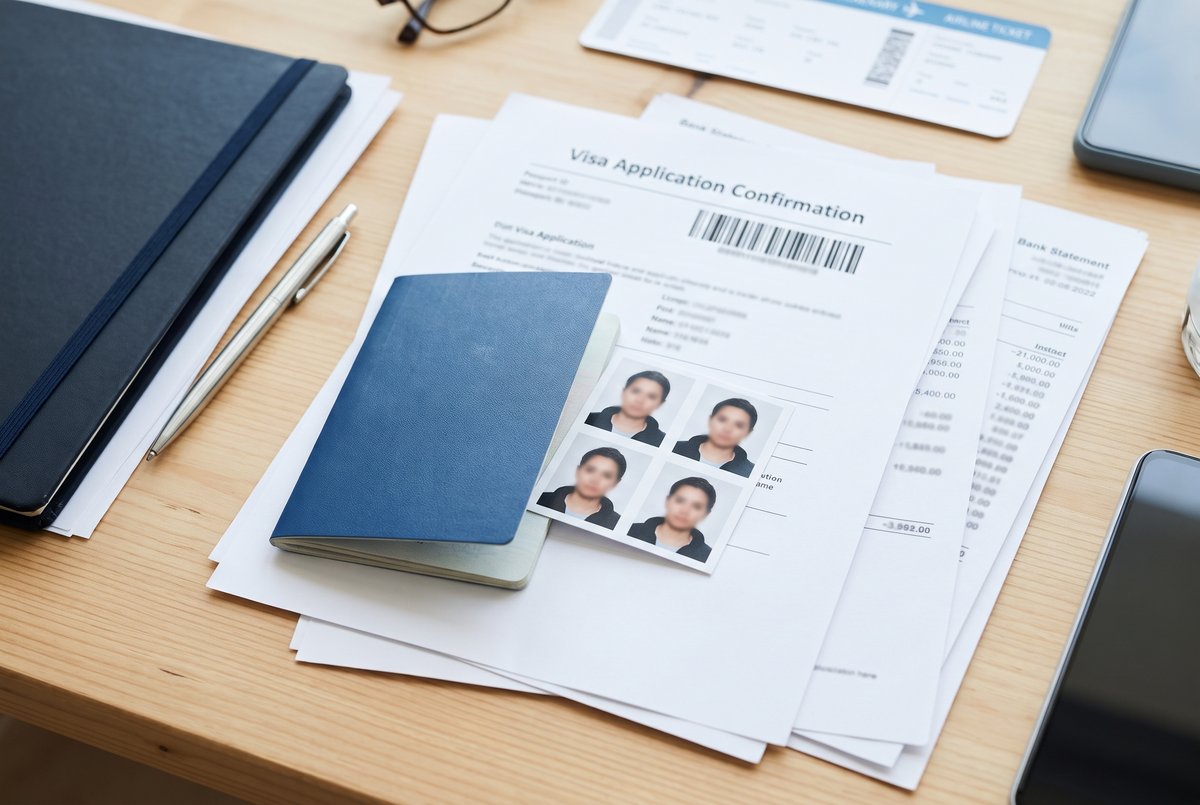
The State Department requires only a few items. Everything else is supporting evidence you bring in case the officer asks.
Required for every applicant:
- Passport valid for at least six months beyond your planned stay (citizens of some countries are exempt from the six-month rule under official agreements — the State Department publishes the list)
- DS-160 confirmation page — the printed page with the barcode, from your online application form
- Fee payment receipt for the visa application fee
- Interview appointment confirmation
- One photo that meets U.S. visa photo rules: 2 x 2 inches (51 x 51 mm), color, taken within the last six months, plain white background, full face facing the camera. In most countries you upload a digital copy inside the DS-160 form
Supporting documents (bring them; the officer may or may not look):
- Employment letter or business registration showing your job/business and approved leave
- Recent bank statements showing you can fund the trip
- Proof of ties: property documents, family details, study enrollment
- A simple travel plan: where you will go, where you will stay, and roughly when
- If visiting family or friends: their address and status in the U.S. (an invitation letter can help explain the visit, but the State Department notes it is not a deciding factor)
- Previous passports with earlier visas, if you have them
Honesty rule: never submit fake bank statements, fake job letters, or borrowed money dressed up as savings. Document fraud is one of the fastest ways to get refused — and it can lead to a long-term or permanent ban from the United States.
How to Apply for a USA Tourist Visa: Step by Step
The order of small details can vary slightly by country, but the official process is the same worldwide:
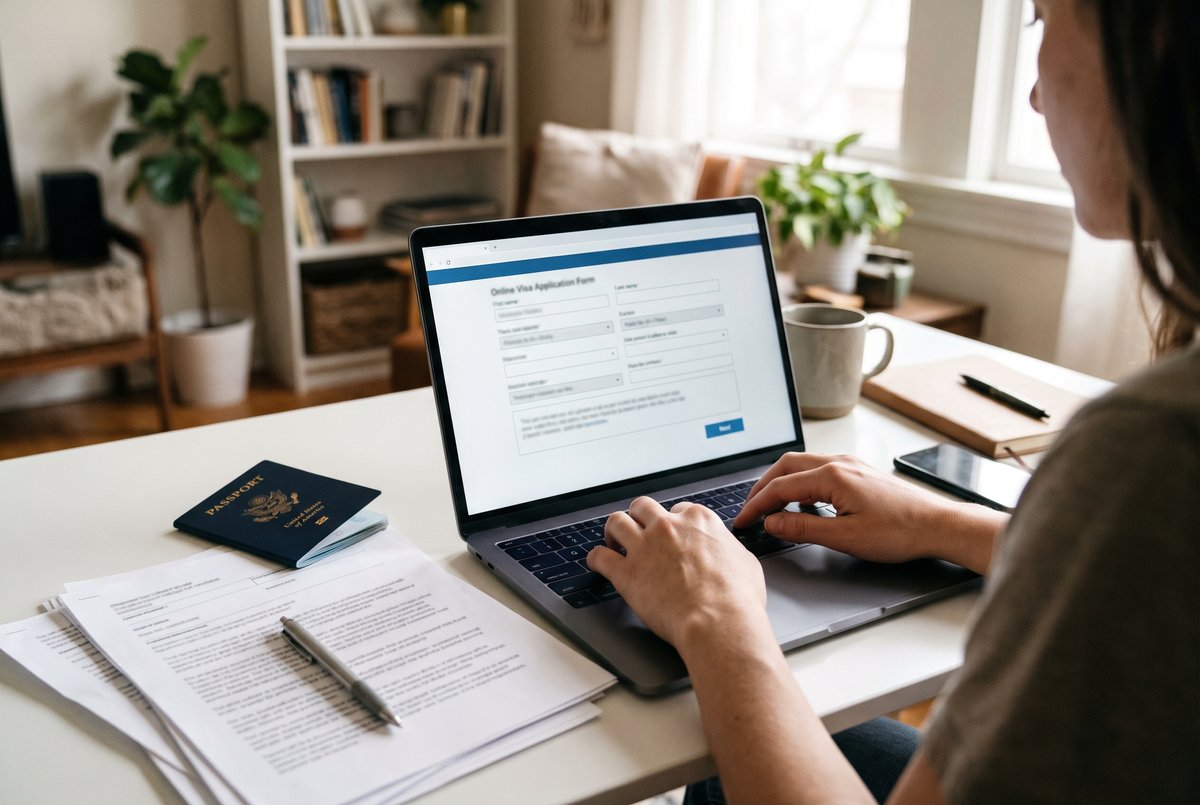
Step 1: Fill the DS-160 form online
Go to the official Consular Electronic Application Center (ceac.state.gov) and complete Form DS-160, the online nonimmigrant visa application. Answer every question truthfully and in English. Save your application ID and save often — the form times out. At the end, submit it and print the confirmation page with the barcode. You will need it at every later step.
Step 2: Pay the application fee
The application (MRV) fee for a visitor visa is $185. You pay it through your country’s official U.S. visa appointment service website — in most countries this is ustraveldocs.com (some countries use ais.usvisa-info.com instead; your local U.S. embassy website links to the correct one). The fee is non-refundable and non-transferable, even if your visa is refused, and it stays valid for 365 days.
Step 3: Book your interview appointment
Create a profile on the same appointment website and schedule your interview at the U.S. Embassy or Consulate. In many countries you first visit a separate application support center for fingerprints and photo, then attend the interview on another day — the website will show you exactly what your country requires. Check your appointment date carefully and apply early: in busy seasons, waits can stretch to months.
Step 4: Prepare your documents
Use the checklist in the section above. Keep originals in one folder, in a sensible order. Practice explaining your trip in a few clear sentences: where you are going, why, for how long, who is paying, and what you will return to at home.
Step 5: Attend the interview
Arrive on time (not excessively early — most embassies will not let you in far ahead). Phones and electronics are generally not allowed inside. Your fingerprints will be scanned, and a consular officer will interview you, usually for just a few minutes. Answer honestly, briefly, and consistently with your DS-160 form.
Step 6: Receive the decision and your passport
Most applicants hear the decision at the interview itself. If approved, the embassy keeps your passport, prints the visa, and returns it through the courier or pickup point you selected — often within about a week, though timing varies. If your case needs extra checks (called administrative processing), it takes longer; there is no way to speed it up.
Official websites to use — and only these: travel.state.gov (information and fee schedules), ceac.state.gov (the DS-160 form), and your country’s official appointment service linked from your local U.S. embassy website (usually ustraveldocs.com or ais.usvisa-info.com).
USA Tourist Visa Fees: What You Will Actually Pay
Budget honestly. The guaranteed cost is the application fee; two other charges can apply depending on your nationality and on rules that are still being rolled out.
| Fee | Amount | When you pay | Refundable? |
|---|---|---|---|
| Visa application (MRV) fee — B1/B2 | $185 | Before booking the interview | No |
| Visa Integrity Fee | $250 | At visa issuance, where it is being collected | Only after the visa expires and only if you fully followed the visa’s terms; the claim process is still being finalized |
| Reciprocity (issuance) fee | Varies by nationality — $0 for many countries | At issuance, only if your country is on the schedule | No |
The Visa Integrity Fee needs one honest explanation: U.S. law created this $250 fee in 2025 for most nonimmigrant visas, charged when the visa is issued. Its rollout across embassies has been uneven, and official collection details have changed over time — so before your interview, check the current position on the State Department’s Fees for Visa Services page and your embassy’s website, and budget for the possibility of paying it. What is certain today: the $185 application fee, payable by every applicant, child or adult.
One more warning: nobody legitimate charges extra for “faster appointments” or “guaranteed approval.” The official fee is the same for everyone, and paying an agent never improves your chances.
The Visa Interview: What Really Happens
The interview is short — often two to five minutes — because the officer has usually reviewed your DS-160 before you reach the window. Typical questions include:
- Why do you want to go to the United States?
- Which cities will you visit, and for how long?
- What work do you do at home? How long have you done it?
- Who is paying for this trip?
- Who will you stay with? Do you have family in the U.S.?
- Have you traveled outside your country before?
Prepare with these principles, not with memorized scripts:
Related Posts

- Be honest, always. Officers interview thousands of people; contradictions between your answers and your DS-160 are a common refusal reason.
- Answer the question asked — briefly and clearly. Long, nervous stories create doubt.
- Show your return plan naturally. Your job, business, studies, and family at home are your strongest evidence. Mention them when relevant.
- Never claim documents you do not have, and never present anything fake “just in case.”
- Dress neatly and stay calm. Confidence comes from preparation, not from an agent’s coaching.
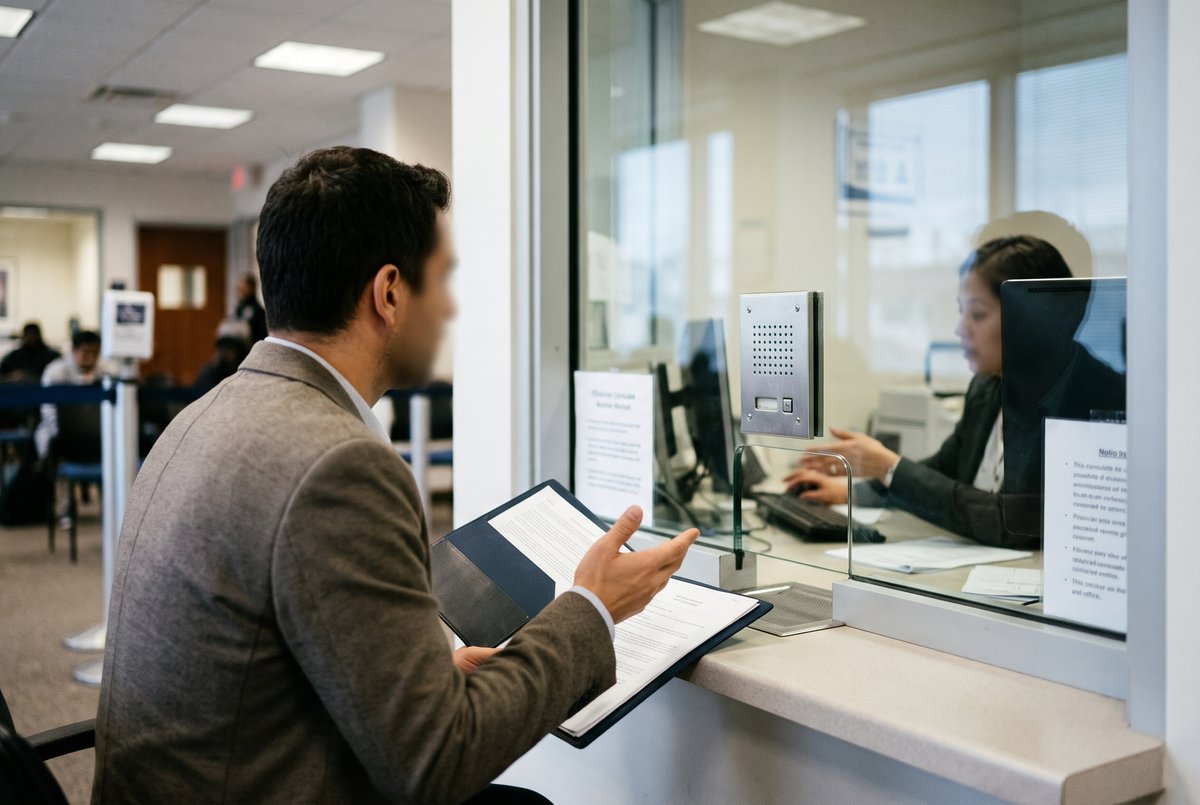
Remember: the officer is not your enemy. Their legal task is to check that your visit is temporary and genuine. A clear, consistent story supported by real ties is exactly what they are looking for.
After the Interview: Approved, Refused, or Still Processing
Approved. Your passport is kept for visa printing and returned by courier or pickup. Before you travel, check every detail printed on the visa (name spelling, passport number, dates). A visa does not guarantee entry — the CBP officer at the airport makes the final entry decision and sets your allowed stay — but with a genuine visit plan this is normally straightforward.
Refused under Section 214(b). This is the most common refusal: it means the officer was not convinced your ties at home are strong enough at this time. It is not a permanent ban, and there is no appeal — but you may reapply when your situation genuinely changes (a more stable job, stronger ties, more travel history). Paying the fee again and reapplying immediately with the same facts almost never changes the result. The refusal letter explains the legal section; officers are not required to review your full document file.
Administrative processing (Section 221(g)). Sometimes the officer needs more information or further checks before deciding. You may be asked for extra documents, or simply told to wait. This can take weeks or longer. Check your case status on the official CEAC website (ceac.state.gov) using your application ID. No agent can speed this up — anyone who promises that for a fee is lying.
One useful fact: if your passport expires but your U.S. visa inside it is still valid, the visa remains valid. Travel with both passports — the old one with the visa and your new one — together with your other documents.
Common Scams and Red Flags
Wherever demand is high, scammers follow. Protect yourself with these rules:
- “Guaranteed U.S. visa” agents. No person or company can guarantee a visa. Anyone who promises approval — especially for a large fee — is scamming you. The decision is made only by a U.S. consular officer.
- Fake appointment sellers. People selling “early interview slots” for cash are almost always frauds or are using methods that can get your profile banned. Book only through the official appointment website.
- Look-alike websites. Fake copies of official sites charge extra “service fees” or steal your data. Type the official addresses yourself: travel.state.gov and ceac.state.gov end in .gov. Appointment sites are linked from your embassy’s official page.
- Fake documents. Sellers of forged bank statements, job letters, or invitation letters are committing fraud — and you carry the punishment: refusal and a possible permanent ban for misrepresentation.
- Fee payments to personal accounts. Official fees are paid only through the methods shown on the official appointment website — never by cash to an individual, gift cards, or crypto.
- “Pay us to fill your DS-160” pressure. Help with the form is fine if it is cheap and honest, but never let anyone enter false information for you. You sign the DS-160 yourself, so every word in it is legally your statement.
- Visa bond demands by phone or message. A limited U.S. visa-bond pilot exists for nationals of a few specific countries, but it is handled only inside the official process — never through a stranger’s phone call or payment link. Check the State Department’s website if you are unsure whether your country is even on that list.
The simple rule: if it is not on a .gov website or your official appointment portal, do not pay for it.
Frequently Asked Questions
1. How much does a USA tourist visa cost in total?
The certain cost is the $185 application fee, paid by every applicant. Depending on your nationality, a reciprocity fee may apply, and a $250 Visa Integrity Fee — created by law in 2025 and still being rolled out — may be collected when your visa is issued. Check the State Department’s Fees for Visa Services page before your interview for the current position for your country.
2. How long is a USA tourist visa valid?
It depends on your nationality, under the State Department’s reciprocity schedule — anything from a few months to ten years, with single or multiple entries. Remember: visa validity is only the window in which you can travel to the U.S.; the CBP officer at entry decides your actual stay, typically up to six months per visit for B visitors.
3. Can I work in the USA on a tourist visa?
No. A B1/B2 visa never allows employment or paid work in the United States — including informal, online-for-a-U.S.-employer, or “trial” work. Working on a visitor visa can lead to deportation and future bans.
If you want to earn from U.S. clients legally, you do it online from your own country — see our complete guide to virtual assistant jobs from home, and more ideas in our Make Money From Home section.
4. How much bank balance do I need?
There is no official fixed amount. You must show you can realistically pay for your trip — flights, stay, food, and emergencies — in a way that matches your income and situation. Consistent, genuine statements that fit your salary or business income matter more than one large, sudden deposit.
5. Do I need confirmed flight and hotel bookings before applying?
No — and the State Department advises against buying non-refundable tickets before your visa is issued. A sensible travel plan (intended dates, cities, where you would stay) is enough for the application and interview.
6. What if my visa is refused? Can I apply again?
Yes. A 214(b) refusal is not a ban. You can reapply at any time by paying the fee again, but reapplying only makes sense when something real has changed — stronger ties, a better travel history, a clearer purpose. The same application usually earns the same answer.
7. Can a U.S. citizen relative or friend “sponsor” my tourist visa?
They can host you and write an invitation letter, and you should honestly state who you are visiting. But there is no formal sponsorship that decides a visitor visa — the officer judges your purpose and your ties at home. An Affidavit of Support is not a required document for B1/B2.
8. How early should I apply?
As early as you can. Interview waiting times vary widely by embassy and season — from days to many months — and some cases need extra processing. Check the current wait times for your city on travel.state.gov and plan backwards from your travel date.
9. Can I extend my stay or change to another visa while in the U.S.?
Extensions and changes of status are separate applications to USCIS with their own rules and strict deadlines, and they are never guaranteed. This guide covers getting the visitor visa itself; if your plans change during a stay, get advice from official USCIS pages or a qualified immigration attorney — never overstay “quietly,” because overstaying cancels your visa and seriously harms future applications.
10. Is the interview always required?
Almost always for first-time applicants. Limited interview-waiver categories exist (for example, some renewals), but the categories have narrowed in recent years and the rules change — check your local U.S. embassy or appointment website for the rules that apply to you right now.
Final Thoughts
A USA tourist visa is not a lottery ticket and it is not a product an agent can sell you. It is a short, official process — one honest form, one fee, one short interview — built around a single question: is this a genuine temporary visit by someone who will return home? If your answers, documents, and ties all tell that same true story, you have done everything that can honestly be done.
Start with the official websites, prepare carefully, and distrust anyone who promises shortcuts or guarantees. Your fair chance is worth more than their expensive promises.
Ready to begin? Open the DS-160 on ceac.state.gov today — and if Europe is on your list too, our next guide walks the same honest road for the Schengen visa.
Read the Next Guide: “Schengen Visa: How to Apply for Europe’s Single Visa, Step by Step” — our complete guide to visiting 29 European countries on one visa.