Planning a trip to London, visiting family in Manchester, or attending a business meeting in the UK? If your nationality requires permission before you travel, you will need a UK visitor visa — officially called the Standard Visitor visa. This guide explains the uk visitor visa in simple English: who needs one, what it costs, which documents to prepare, and how to apply step by step on the official GOV.UK website. No agents, no shortcuts, no false promises — refusals are common, so we also explain the main refusal reasons honestly, and how to avoid them.
What Is the UK Visitor Visa (Standard Visitor)?
The Standard Visitor visa is the UK’s main short-stay visa. It lets you visit the United Kingdom for up to 6 months for tourism, seeing family or friends, certain business activities, short study courses of up to 6 months, and some other permitted activities.
One important point: the Standard Visitor replaced several older visitor visas (family visitor, business visitor, tourist visitor and more). Today they are all one route — the Standard Visitor.
If you visit the UK often, you can instead apply for a long-term Standard Visitor visa lasting 2, 5 or 10 years. But each single visit is still limited to 6 months maximum, and frequent long stays must not be used to effectively live in the UK.
Who Needs a UK Visitor Visa? Visa vs ETA Explained
Whether you need a visa at all depends on your nationality. The UK divides travellers into three groups:
- Visa nationals — citizens of countries on the UK’s “visa national” list (for example Pakistan, India, Bangladesh and Nigeria). You must receive a Standard Visitor visa before you travel — you cannot board your flight without it.
- Non-visa nationals — citizens of countries that do not need a visa for short visits (for example the USA, Canada, Australia, EU countries, Japan, UAE and Saudi Arabia). You do not need a visitor visa, but since 2025–2026 you do need an ETA (Electronic Travel Authorisation) before travelling. The ETA is a quick online permission (currently £20), linked to your passport and valid for 2 years, allowing multiple trips of up to 6 months. Since 25 February 2026, airlines must check it — without an ETA, you cannot legally travel.
- British and Irish citizens — need neither a visa nor an ETA.
The safe rule: never guess from a blog or a friend’s experience, because nationality lists change. Use the official “check if you need a UK visa” tool on GOV.UK with your own passport details. If it says you need a visa, this guide is for you. If it says ETA, apply only through the official UK ETA app or GOV.UK — copycat websites charge extra for the same thing.
Who Can Apply? Eligibility Explained
There is no age limit and no minimum income written in the rules. Instead, the decision-maker (called an Entry Clearance Officer) must be satisfied that you are a genuine visitor. In plain English, you must show four things:
- You will leave the UK at the end of your visit. Strong “ties” to your home country help here: a job, a business, studies, property, or close family who stays behind.
- You can support yourself (and any dependants travelling with you) during the trip without working or claiming public funds — or someone else is genuinely funding you and can prove it.
- You can pay for your return or onward journey.
- You will not live in the UK through frequent or long visits, or make it your main home.
Your passport must be valid for the whole of your stay. You do not pay the Immigration Health Surcharge on a visitor visa — that charge applies to work and study routes, not visitors.
Documents You Will Need: The Checklist
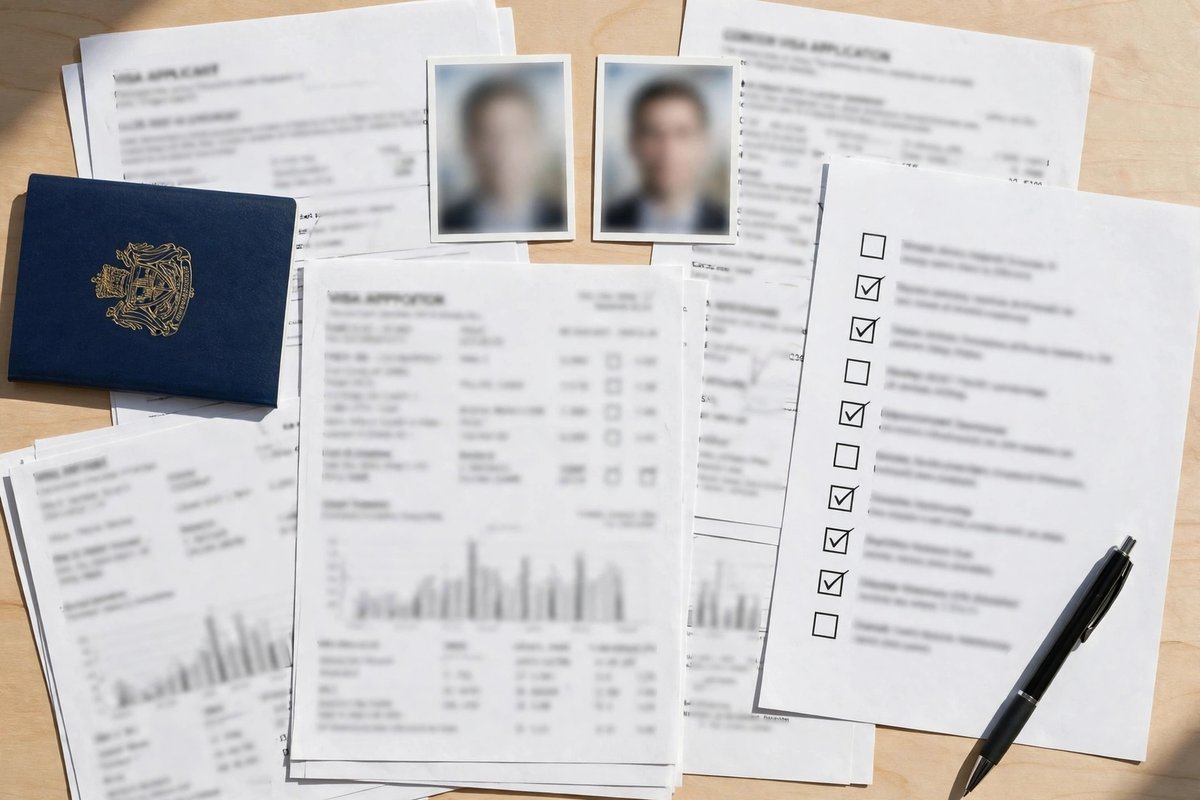
GOV.UK does not publish one single mandatory document list for visitors — the evidence depends on your situation. In practice, a strong application usually includes:
- Valid passport (plus any old passports showing travel history, if you have them)
- Bank statements — usually the last 6 months, showing regular income and a balance that comfortably covers the trip; the money should match the income you declare
- Proof of employment — a letter from your employer confirming your job, salary, start date, and that your leave is approved with a return date (if self-employed: business registration and business bank records)
- Proof of ties — property documents, family details, or enrolment proof if you are a student
- Trip plan — where you will stay (hotel bookings or a letter from your host in the UK), rough dates, and what you plan to do
- If someone in the UK is hosting or funding you — their invitation letter, a copy of their ID or immigration status, and evidence they can support you
Two rules matter more than any single document. First, everything must be genuine — UKVI verifies bank statements and employment letters, and a fake document can lead to refusal and a long ban. Second, everything must be consistent — your form, statements and employer letter must tell the same story. Documents not in English or Welsh need a certified translation.
How to Apply for a UK Visitor Visa: Step by Step
Step 1: Check your route and read the official rules
Start on the official Standard Visitor visa page on GOV.UK. Confirm your activity is permitted, check your nationality route (visa or ETA), and read the eligibility section carefully. This takes 15 minutes and prevents the most common mistakes.
Step 2: Complete the online application form
Applications are made online. The official apply for a Standard Visitor visa page is where you start the form. You will answer questions about your travel dates, where you will stay, the trip cost, your income and employment, your travel history (usually 10 years), and any previous refusals or immigration problems — for any country, not just the UK.
Take your time and answer truthfully. A refusal you declare honestly hurts far less than one the officer discovers.
Step 3: Pay the visa fee online
You pay the fee online by card at the end of the form. The standard 6-month visa currently costs £135. Fees are set by the Home Office and change from time to time (usually each April), so confirm the live figure on GOV.UK before you apply. The fee is not refunded if you are refused.
Step 4: Book and attend your biometrics appointment
After paying, you will be directed to book an appointment at a visa application centre in your country. These centres are run for UKVI by commercial partners — mainly VFS Global and TLScontact, depending on the country. At the appointment you give your fingerprints and a photograph (biometrics), show your passport, and either submit your supporting documents or have them scanned. Many applicants can upload documents online before the appointment instead.
An important note: VFS Global and TLScontact only collect your biometrics and documents. They do not decide your application — the decision is made by UK Visas and Immigration (UKVI). No centre staff member can influence the result.
Step 5: Wait for the decision
Once you have applied online, proved your identity and provided your documents, you will usually get a decision within 3 weeks. Some centres offer optional paid priority services (for example, around £500 for a decision within 5 working days, where available) — official optional extras that speed up the decision but never improve your chances.
Step 6: Receive your visa and travel
If approved, your permission is issued as an eVisa (a digital record linked to your passport) and/or a visa sticker in your passport, depending on where you applied — follow the instructions in your decision email or letter exactly. Check every detail (name, dates, visa type) as soon as you receive it.
Official website to apply: all genuine applications start and end at GOV.UK — the Standard Visitor section (www.gov.uk/standard-visitor). Any other website is, at best, an unofficial middleman.
UK Visitor Visa Fees and Key Facts
| Detail | Official information (GOV.UK) |
|---|---|
| Visa name | Standard Visitor visa |
| Standard fee (up to 6 months) | £135 |
| Long-term visa — 2 years | £506 |
| Long-term visa — 5 years | £903 |
| Long-term visa — 10 years | £1,128 |
| Maximum stay per visit | 6 months (also on long-term visas) |
| Medical treatment visitor (up to 11 months) | £234 |
| Academic visitor (up to 12 months) | £234 |
| Earliest you can apply | 3 months before you travel |
| Usual decision time | Within 3 weeks after biometrics and documents |
| Immigration Health Surcharge | Not charged for visitor visas |
| Fee refund if refused | No — the fee is not refunded |
Processing Times: How Long Does It Take?
The official service standard is simple: once you have applied online, proved your identity and provided your documents, you will usually get a decision within 3 weeks. The clock starts from your biometrics appointment (or identity verification), not from the day you start the form.
Some applications take longer — for example if UKVI needs to verify documents, ask for more evidence, or invite you to an interview. Apply as early as you can: up to 3 months before your travel date.
One honest warning that saves people money every year: do not book non-refundable flights or hotels before your visa is granted. A late or refused decision will not be compensated.
Related Posts


What You Can and Cannot Do on a Visitor Visa
You CAN:
- Visit for tourism — holidays, sightseeing, visiting family or friends
- Attend business meetings, interviews, conferences and trade fairs (without being paid by a UK company)
- Study a course of up to 6 months at an accredited institution
- Volunteer for up to 30 days with a registered charity
- Take a short recreational course (for example, a 30-day dance course)
- Receive private medical treatment
You CANNOT:
- Work — paid or unpaid work for a UK company, or self-employed work, is forbidden (the only narrow exception is a “permitted paid engagement” for invited experts, arranged under its own strict rules)
- Claim public funds (state benefits)
- Live in the UK through frequent or successive long visits
- Marry or form a civil partnership (that needs a Marriage Visitor visa instead)
- Study a long course — courses over 6 months need a student route instead
Working on a uk visitor visa is illegal. If discovered, your visa can be cancelled, you can be removed, and future applications become extremely difficult. If your real goal is to work in the UK, look at the official work visa routes instead — a uk visitor visa is never a back door into a job.
Common Refusal Reasons and How to Avoid Them
Let us be honest: the uk visitor visa has one of the highest refusal rates of any UK route, especially for first-time applicants from visa-national countries. No one can promise you approval. What you can do is avoid the mistakes that cause most refusals:
- The officer is not convinced you will go home. Weak ties are the number one reason. Fix: show real evidence of your life at home — job with approved leave and a return date, business, studies, property, close family.
- Money that does not make sense. A large lump sum suddenly appearing in your account (“funds parking”) is a classic refusal trigger, as is a trip costing many times your monthly income. Fix: build your balance naturally from real income, and keep the budget believable.
- Inconsistent information. The form says one salary, the employer letter another, the statements a third. Fix: check every number across every document before submitting.
- A vague trip plan. “Tourism, 6 months, staying with a friend” with no detail invites doubt. Fix: give a clear, realistic plan — dates, places, bookings, and a sensible length (most genuine holidays are 2–4 weeks).
- Hidden history. Previous refusals (from any country), overstays, or false documents that you fail to declare. Fix: declare everything honestly. A declared refusal with a stronger new application is far better than a discovered secret; a fake document can mean a 10-year ban.
- Applying for a long-term visa first time. Asking for 10 years when you have never travelled looks risky to an officer. Fix: apply for the standard 6-month visa first and build a travel history.
If you are refused, the decision letter explains why. There is generally no right of appeal for visitor refusals — the usual route is a fresh application that fixes the stated problems (each new application means a new fee). Compare this with the American process in our USA tourist visa guide: the interview there plays the role that documents play here, and in both systems honesty and consistency decide the result.
After You Apply: Decision, eVisa and Travel
When the decision is made, you will be contacted by email or by the application centre about collecting your passport or viewing your digital status. The UK is moving from physical visa stickers to eVisas — digital records linked to your passport — so follow the exact instructions you are given. Before travelling, check your visa details match your passport exactly, and carry your key documents (return ticket, accommodation details, evidence of funds) in your hand luggage, because border officers may ask about your plans. Remember: you cannot switch into a work or study route from inside the UK as a visitor.
Our Visa guides section collects step-by-step walkthroughs for other countries in the same honest, official-source style, so you can compare requirements before choosing where to apply next.

Common Scams and Red Flags
- “Guaranteed UK visa” agents. Nobody — no agent, no “consultant,” no contact inside any embassy — can guarantee a UK visa. The decision is made by UKVI officers. A guaranteed approval is a guaranteed lie.
- Fake bank statements and forged employment letters sold by agents. UKVI verifies documents with banks and employers. Getting caught means refusal and a ban of up to 10 years.
- Copycat ETA and visa websites that look official and charge £60–£100+ for an ETA that costs £20 on GOV.UK. Apply only on GOV.UK and the official UK ETA app.
- “Work on a visitor visa” job offers. Anyone offering you a UK job on a tourist visa is leading you into illegal work, exploitation, or a scam for your money. Real UK jobs need a real work visa sponsored by a licensed employer.
- Document “fixers” and paid “secret question” coaching. Visitor decisions are document-based; there are no secret questions to buy.
- Pressure to overstay or “apply from inside.” Advice to enter as a visitor and overstay or switch routes illegally is advice to break immigration law, with removal and long bans as the outcome.
The rule from all our guides applies here too: if it is not on GOV.UK, do not pay for it and do not trust it with your documents.
Frequently Asked Questions
1. How much does a UK visitor visa cost?
The standard 6-month Standard Visitor visa costs £135. Long-term options cost £506 (2 years), £903 (5 years) and £1,128 (10 years). Fees are set by the Home Office and usually change each April — always confirm the current fee on GOV.UK before applying. The fee is not refunded if you are refused.
2. How long can I stay in the UK on a visitor visa?
Up to 6 months per visit — including on 2, 5 and 10-year long-term visas. The long-term visa only saves you re-applying; it does not let you stay longer per trip, and repeated long stays can lead officers to conclude you are living in the UK, which can get the visa cancelled.
3. How long does a UK visitor visa take to process?
Usually within 3 weeks after you have applied online, proved your identity (biometrics) and provided your documents. Verification checks or interviews can make it longer. You can apply up to 3 months before travel — do so, and avoid non-refundable bookings until the visa is granted.
4. What is the difference between a UK visitor visa and an ETA?
They serve different nationalities. If your country is on the visa-national list, you need a full Standard Visitor visa before travel. If your country is visa-free for short visits (for example the USA, EU states, Australia), you instead need an ETA — a £20 online authorisation, valid 2 years, via the official UK ETA app or GOV.UK. British and Irish citizens need neither.
5. Can I work in the UK on a visitor visa?
No. Paid or unpaid work for a UK company, and self-employment, are prohibited on a visitor visa (one narrow exception exists for pre-arranged “permitted paid engagements” by invited experts). Working illegally risks removal and long bans. If you want to work in the UK, you need a sponsored work visa.
6. Do I need to show a specific amount of money in my bank?
There is no fixed official amount. The officer must be satisfied you can afford the trip — flights, accommodation, food, activities — with money that fits your real income and circumstances. A believable budget supported by genuine, consistent bank statements matters far more than one large deposit.
7. Can I apply again if my UK visitor visa is refused?
Yes. There is usually no appeal for visitor refusals, but you may make a new application (with a new fee) that directly fixes the reasons in your refusal letter. Reapplying with the same weak evidence normally produces the same result — strengthen your ties, funds evidence and consistency first.
8. Can my family in the UK sponsor my visit?
Yes — a UK-based host can invite you and help with accommodation or costs. Their invitation letter, ID/status documents and financial evidence can support your application. But the officer still assesses your circumstances and ties most heavily — a strong sponsor does not replace a weak personal application.
9. Can I extend a UK visitor visa or switch to another visa inside the UK?
Generally, no. Visitors cannot extend beyond 6 months except in a few narrow cases (for example, ongoing private medical treatment), and you cannot switch into work or study routes from inside the UK as a visitor. Plan to leave by the end of your permitted stay and apply for other routes from your home country. (One cost note: the Immigration Health Surcharge does not apply to visitor visas — but visitors generally pay for most NHS treatment, so travel insurance is strongly recommended.)
Final Thoughts
The uk visitor visa process is demanding, but it is not a lottery — it is an evidence test. The applicants who succeed treat it that way: a genuine reason to visit, honest documents that agree with each other, believable finances, and strong reasons to return home. Prepare your evidence before you open the form, apply up to three months early on GOV.UK only, and never pay anyone who promises a guaranteed result.
Do that, and you give your application the best chance the system allows — whatever your travel history looks like today.
Read the Next Guide: “Schengen Visa: How to Apply for a Europe Tourist Visa Step by Step” — our complete guide to visiting 29 European countries on one visa.