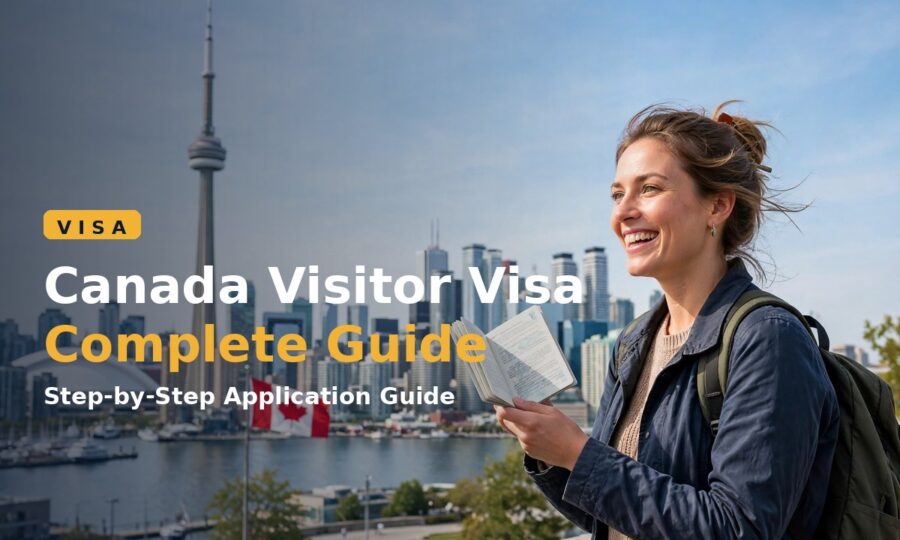
A Canada visitor visa is the official permission that lets you enter Canada for tourism, family visits, or short business trips. This guide explains the whole process in simple English, using only official Immigration, Refugees and Citizenship Canada (IRCC) information: who needs a visa, who can use an eTA instead, which documents to prepare, how to apply online step by step, what it costs, and why applications get refused.
If you have already read our guide to the USA tourist visa, you will notice one big difference: Canada decides most visitor applications on paper alone, usually with no interview. Your documents must tell your whole story — clearly and honestly. No one can guarantee an approval, but a complete and truthful application gives you your fair chance.
Canada Visitor Visa vs eTA: Which One Do You Need?
Canada has two different travel documents for visitors, and choosing the wrong one wastes time and money.
A visitor visa, officially called a Temporary Resident Visa (TRV), is a visa placed in your passport. It proves you met Canada’s requirements before you travel. If your country is “visa-required,” you need this visa to enter Canada by any method — plane, car, bus, train, or boat.
An eTA (electronic travel authorization) is a light online authorization linked electronically to your passport, mainly for travellers from visa-exempt countries who fly to Canada. It costs CAD $7, most applications are approved within minutes by email, and it stays valid for up to 5 years or until your passport expires.
The special rule: some visa-required travellers can fly with an eTA
Canada also lets citizens of some visa-required countries apply for an eTA instead of a visa — but only for air travel, and only if they meet all three conditions:
- Their passport is from one of the eligible countries on IRCC’s official list (including Brazil, Mexico, the Philippines, Thailand, Morocco, Argentina, Indonesia, and Malaysia — check the current list on Canada.ca, because it changes).
- They have held a Canadian visitor visa in the past 10 years, or they currently hold a valid U.S. non-immigrant visa (the U.S. visa must be valid on the day they apply for the eTA).
- They are flying to, or transiting through, a Canadian airport for a temporary stay.
If any condition is missing, that traveller needs a full visitor visa. And the same person still needs a visitor visa to enter Canada by car, bus, train, or boat — the eTA option is for flights only.
Two more rules prevent confusion. First, you need either a visa or an eTA, never both: with a valid Canadian visitor visa, you do not apply for an eTA. Second, neither document guarantees entry — a border services officer decides when you arrive, and can refuse entry if your answers or documents do not match your application.

Canada Visitor Visa Eligibility: Who Can Apply?
IRCC’s basic requirements are the same for every applicant. To get a Canada visitor visa, you must:
- Have a valid passport (or another accepted travel document).
- Be in good health — some applicants need a medical exam.
- Have no criminal or immigration-related convictions.
- Convince the officer you have strong ties to your home country — a job, a home, assets, or family that will take you back.
- Convince the officer you will leave Canada at the end of your visit.
- Have enough money for your stay. There is no single official amount: it depends on your stay length and whether you use a hotel or stay with friends or family.
Ties are the heart of the application. A stable job with approved leave, a business, property, close family at home, and ongoing studies all show your life is rooted where you live. A previous travel history — earlier trips where you returned home on time — also supports your case.
Every country weighs these factors in its own way. Our UK visitor visa guide shows how the British system checks funds and ties, and you will see that the logic is similar: the officer must believe the visit is temporary and affordable.
Some people are inadmissible to Canada — for example because of criminal activity, security or health grounds, or past misrepresentation. If that may apply to you, read IRCC’s inadmissibility pages before paying any fee, because fees are not refunded after a refusal.
Documents You Will Need
When you apply online, the portal gives you a personalized document checklist based on your answers. Prepare clear scans of:
- Passport — the page with your photo, birth date, and country of origin, plus any pages with stamps, visas, or markings. IRCC recommends validity of at least 6 months from your travel date; renew first if needed.
- Application forms — the application form (IMM 5257) and the family information form your checklist names (such as IMM 5645 or IMM 5707). If someone represents you, form IMM 5476 may also appear.
- Digital photo that meets IRCC’s specifications, if your checklist asks for one.
- Bank statements — IRCC asks for at least 6 months of account history with balances, showing the account is yours (your name and address on the statement). This proves your funds are stable, not borrowed last week.
- Employer letter (if you work) — on company letterhead, dated within 3 months of applying, confirming your job, start date, duties, salary, and approved leave. Self-employed applicants can use business registration and tax documents instead.
- Letter of invitation (if visiting family, friends, or a business) — from the person or company in Canada inviting you.
- Travel history — copies of previous passports, old visas, and entry/exit stamps from the last 10 years.
- Trip plan (itinerary) — flight details, hotel bookings, or event registration showing your stay length and plans.
Your local visa office can require additional documents. Upload exactly what your checklist asks for — missing papers are a common cause of delays and refusals.
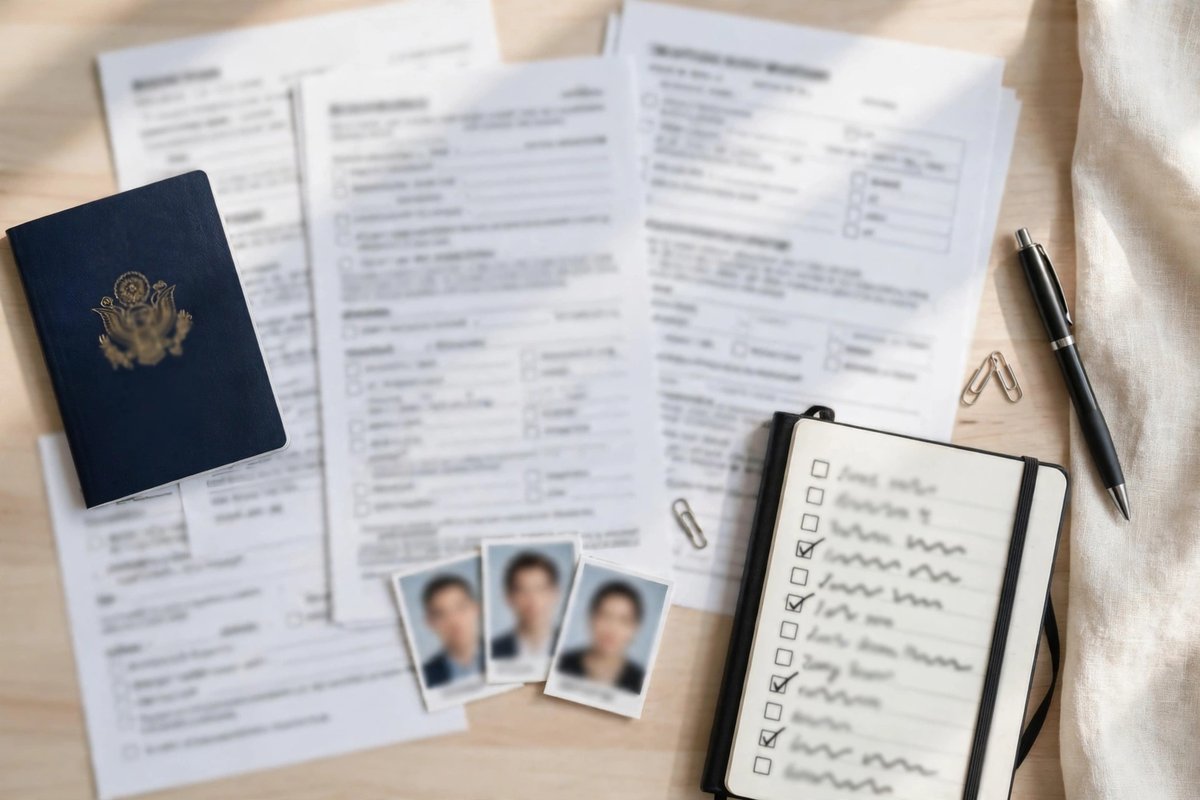
How to Apply for a Canada Visitor Visa: Step by Step
Step 1: Confirm which document you need
Start on the official Visit Canada page and answer its short questionnaire. It tells you whether you need a visitor visa, an eTA, or neither — protecting you from paying for the wrong document.
Step 2: Create your IRCC account
Visitor visa applications are submitted online, through the IRCC Portal or an IRCC secure account. Use an email address you check daily — IRCC sends every update, including your biometrics letter, through your account.
Step 3: Complete the forms and upload your documents
Answer the eligibility questions, and the system builds your personal document checklist. Fill in each form carefully, use the form’s “Validate” button if it has one (this creates the barcode pages IRCC needs), and upload clear scans of every document. Names, dates, and passport numbers must match across all documents exactly.
Step 4: Pay the fees
At the end of the application you pay by card: CAD $100 for the visa, plus CAD $85 for biometrics if you must give them. First-time applicants should pay both together — IRCC warns that paying later causes delays.
Step 5: Give your biometrics at a VAC
Most applicants must give biometrics (fingerprints and a photo) after applying. IRCC sends a Biometrics Instruction Letter to your account. Book an appointment at the nearest official Visa Application Centre (VAC) — in many countries operated by VFS Global — and attend in person with your passport and the letter. Biometrics are normally valid for 10 years.
Step 6: Wait for the decision, then send your passport if asked
Processing times vary a lot by country — there is no single worldwide number, and anyone quoting you one fixed time is guessing. Check the current estimate for your country in IRCC’s official processing-times tool, apply early, and do not book non-refundable travel before approval.
If IRCC approves your application, you receive a passport request letter — follow it to submit your passport through the VAC so the visa can be placed inside it. If refused, you receive a letter explaining the officer’s reasons; read the refusal section below before doing anything else.
Official website: apply and check everything on Canada.ca, the Government of Canada website — start from IRCC’s own instructions on how to apply for a visitor visa, and never through a look-alike site.
Related Posts


Canada Visitor Visa Fees and Key Facts
| Item | Official detail |
|---|---|
| Visitor visa fee | CAD $100 per person (single or multiple entry — IRCC decides which you receive) |
| Visitor visa family maximum | CAD $500 for a family of 5 or more applying at the same time and place |
| Biometrics fee | CAD $85 per person; family maximum CAD $170 |
| eTA fee | CAD $7 (only on the official Canada.ca website) |
| Biometrics validity | Normally 10 years |
| Processing time | Varies by country — check IRCC’s official processing-times tool |
| Length of stay | Up to 6 months per visit; the border officer decides |
| Fee refunds | None — fees are not refunded if the application is refused |
How Long Can You Stay — and the Super Visa Option
Most visitors may stay in Canada for up to 6 months from the day they enter. The border services officer can allow a shorter or longer stay depending on the purpose of your visit, and may stamp your passport or issue a visitor record showing the date you must leave. With no stamp and no other date, your stay ends on whichever comes first: 6 months after entry, your passport’s expiry, or your biometrics’ expiry.
To stay longer, apply for a visitor record (an extension) before your status expires — IRCC recommends at least 30 days ahead; the fee is CAD $100. Never simply stay past your date: overstaying seriously damages future applications.
The super visa, in brief
Parents and grandparents of Canadian citizens, permanent residents, or registered Indians may qualify for a super visa instead: a multiple-entry visa valid for up to 10 years, allowing stays of up to 5 years per visit. Extra requirements apply: the child or grandchild in Canada must meet a minimum income level and provide a signed invitation letter; the parent must apply from outside Canada, pass a medical exam, and show private health insurance valid for at least 1 year from a Canadian insurer or an approved foreign insurer.
Common Reasons for Refusal — and What to Do Next
Refusals are common, and the letter always names the officer’s reasons. The most frequent ones are:
- The officer is not satisfied you will leave Canada at the end of your stay — weak ties are the single biggest cause.
- Purpose of visit is unclear or inconsistent — your forms, letter, and trip plan tell different stories.
- Not enough money, or money that appeared in your account suddenly with no explanation.
- Weak or no travel history combined with a weak overall profile.
- Incomplete or inconsistent documents, or a checklist item missing.
- Misrepresentation — false information or fake documents. This is the most serious: it can bring a 5-year ban from Canada.
What to do next: IRCC’s guidance is clear — applying again with the same information will very likely get the same result. Reapply only when your situation has genuinely changed, or you have strong new documents answering the refusal reasons. No representative can overturn a refusal by influence.
Common Scams and Red Flags
Canada’s popularity makes its visa a favourite target for fraud. Protect yourself:
- “Canada visa + job package” sellers. A visitor visa never includes a job or a work permit. Anyone selling you a tourist visa as a route to work in Canada is setting you up to work illegally or lose your money.
- Forged bank statements and fake documents. Sellers who “arrange” a bank balance or print fake employment letters commit fraud with your name on it. IRCC verifies documents, and misrepresentation means refusal plus a possible 5-year ban.
- Fake eTA and visa websites. Look-alike sites charge CAD $50–$100+ for an eTA that costs CAD $7 on Canada.ca — or simply steal your card details. Type the address yourself: canada.ca.
- “Guaranteed visa” agents. No agent or “insider” can guarantee approval or speed up an officer’s decision. IRCC itself warns that hiring a representative does not improve your chances.
- Fees paid to a person. Official fees are paid inside your IRCC account by card. Never pay visa fees to a personal bank account, gift cards, or crypto.
- Overstay “advice.” Anyone telling you to enter as a tourist and “adjust later” is advising you to break the law. Overstaying can lead to removal and refusal of future visas.
The rule from all our visa guides applies here too: if it is not on Canada.ca, do not pay for it and do not send your documents to it.
Frequently Asked Questions
1. How much does a Canada visitor visa cost?
The visa costs CAD $100 per person, and biometrics cost CAD $85 per person if you must give them — so most first-time applicants pay CAD $185 in total. A family of 5 or more pays a maximum of CAD $500 in visa fees and at most CAD $170 for biometrics. Fees are paid online by card and are not refunded after a refusal.
2. How long can I stay in Canada on a visitor visa?
Usually up to 6 months per visit. The border services officer who admits you decides the exact length and may set a shorter date, which is stamped in your passport or written on a visitor record. You must leave by that date or extend your stay legally before it expires.
3. Will I get a single-entry or multiple-entry visa?
IRCC decides, and the fee is the same either way. Canada issues multiple-entry visas whenever possible, though sometimes only a single-entry visa is given. A multiple-entry visa lets you enter repeatedly while valid, each stay normally up to 6 months.
4. Do I have to give biometrics?
In most cases, yes — applicants give fingerprints and a photo at an official Visa Application Centre once IRCC sends the instruction letter. Some applicants are exempt (for example, children aged 13 and under, and applicants aged 80 and over). Biometrics are normally valid for 10 years, so you usually do not repeat them within that period.
5. How long does processing take?
There is no single answer: times differ by country and change with application volumes. Check IRCC’s official processing-times tool for your country, apply well before your travel date, and avoid non-refundable bookings until the visa is in your passport.
6. Can I work in Canada on a visitor visa?
No. A visitor visa (and an eTA) lets you visit — tourism, family, and short business activities such as meetings or conferences. Working in Canada requires a work permit, which is a completely separate application. Working on visitor status is illegal and can lead to removal and future refusals.
7. My application was refused. Can I apply again?
Yes, but only when something has genuinely changed or you have new evidence answering the refusal reasons in your letter. Resubmitting the same profile normally brings the same decision, and fees are not refunded.
8. Can I extend my stay after I arrive?
Yes — apply for a visitor record before your authorized stay ends (IRCC suggests at least 30 days before). The fee is CAD $100 per person. A visitor record is not a new visa; it gives you a new date by which you must leave Canada.
9. If I already have a valid visitor visa, do I also need an eTA?
No. You need one or the other. A valid visitor visa is enough to travel to Canada until it expires; do not pay for an eTA on top of it.
10. What is the super visa, and who is it for?
The super visa is for parents and grandparents of Canadian citizens, permanent residents, or registered Indians. It allows stays of up to 5 years per visit on a multiple-entry visa valid for up to 10 years. It requires a host in Canada who meets a minimum income level, a medical exam, and private health insurance valid for at least 1 year.
Final Thoughts
A Canada visitor visa application is really one question, asked in many ways: is this a genuine, temporary visit that this person can afford — and will they go home afterwards? Every document should help answer that question honestly. Strong ties, stable funds, a clear trip plan, and a complete checklist cannot guarantee approval — nothing can — but they give the officer everything needed to say yes.
Start on Canada.ca, prepare your documents before you open the application, and pay only the official fees. That careful, honest route is the only real shortcut there is.
Read the Next Guide: “Dubai Tourist Visa: Costs, Types and How to Apply Online” — our complete guide to visiting the UAE.