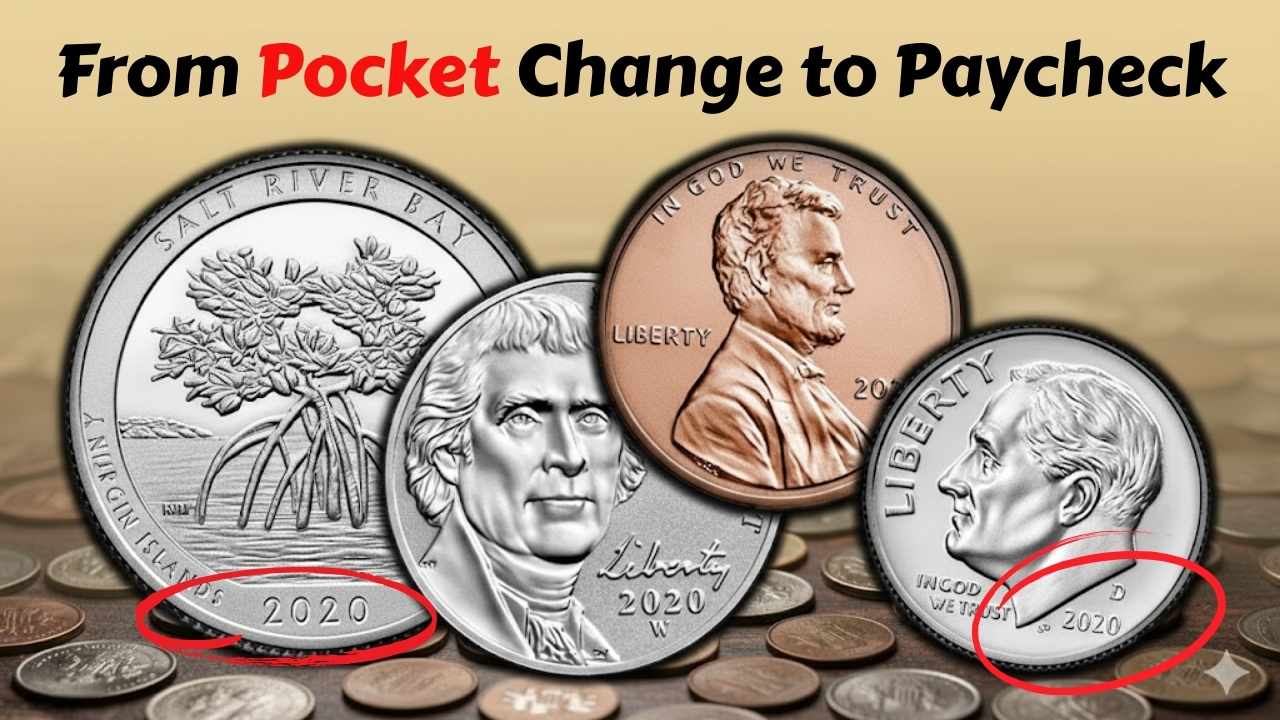
If you’ve ever glanced at your pocket change and wondered if it might be worth more than face value you’re not alone. Some of the most valuable U.S. coins ever discovered were found in everyday circulation. That means it’s entirely possible for a rare coin to slip into your wallet without you even realizing it.
Whether you’re a beginner coin collector or just someone curious about coins that turned into goldmines, this guide breaks down the top 5 U.S. coins that were once everyday money but are now worth thousands (sometimes even millions).
Let’s dive into the exciting world where pennies become paydays.
1. 1943 Copper Penny – The Million-Dollar Mistake
Most pennies from 1943 were made of steel coated with zinc due to copper shortages during World War II. But a small number were mistakenly struck on copper planchets, and those few are now some of the most sought-after coins in American numismatics.
Why It’s Valuable:
Only a handful of genuine 1943 copper pennies exist. One famously sold for $1.7 million at auction.
What to Look For:
- It should stick to a magnet (steel version) but the valuable copper ones won’t.
- Weighs about 3.11 grams (steel versions are lighter).
- Has a warm reddish-brown tone, not silver or gray.
Tip for Beginners:
If you find a 1943 penny that isn’t magnetic, don’t clean it. Have it authenticated by a reputable coin grading service like PCGS or NGC.
2. 1955 Doubled Die Lincoln Cent – The Eye-Catcher
This coin is famous for its dramatically doubled lettering, especially on the words “LIBERTY” and “IN GOD WE TRUST.” It was a result of a misalignment during the minting process, and collectors love it.
Why It’s Valuable:
Collectors are willing to pay $1,000 to $15,000+, depending on condition, for this mistake coin.
What to Look For:
- Obvious doubling on the date and text.
- Found only on coins minted in Philadelphia (no mint mark).
- Not to be confused with more minor, modern double dies.
Tip for Beginners:
Use a magnifying glass or jeweler’s loupe to inspect any 1955 pennies you come across. Even worn examples can fetch a premium.
3. 1969-S Doubled Die Obverse Penny – The Hidden Gem
Unlike the 1955 version, this 1969 penny from the San Francisco Mint is much rarer and often overlooked. Only a few dozen are confirmed to exist.
Why It’s Valuable:
High-grade examples have sold for over $35,000. It’s one of the rarest doubled die cents out there.
What to Look For:
- Strong doubling on the date and “LIBERTY”.
- Must have an “S” mint mark under the date.
- Crisp, clean doubling not blurred or fuzzy.
Tip for Beginners:
If you have a jar of old pennies, go through your 1969 coins carefully. If you spot one with heavy doubling and an “S” mintmark, you might be holding a small fortune.
4. 1982 No Mint Mark Roosevelt Dime – Small Coin, Big Bucks
In 1982, the U.S. Mint made a change by removing mint marks from some of its coins temporarily. While that’s not uncommon, what makes this Roosevelt dime valuable is that it was mistakenly struck without a mint mark on a Philadelphia die a major error at the time.
Why It’s Valuable:
A rare variety without the mint mark can sell for $300 to $1,500+, especially in high grades.

What to Look For:
- Check dimes dated 1982.
- The valuable error has no mint mark at all.
- Must be the “strong” strike version, not weak or worn.
Tip for Beginners:
Get familiar with where the mint mark should appear to the left of the torch on the reverse. If it’s missing, you could be looking at a rare find.
5. 2004 Wisconsin Extra Leaf Quarters – Corn Leaves of Cash
This is one of the most fun modern error coins. In 2004, Wisconsin quarters were released as part of the State Quarters program. Some of them had an extra corn leaf on the ear of corn depicted on the reverse.
Why It’s Valuable:
Two varieties exist: the “Extra Leaf High” and “Extra Leaf Low.” Each can fetch $300 to $1,500+, depending on condition and demand.
What to Look For:
- The leaf appears abnormally placed either high or low on the left side of the corn stalk.
- Found in circulation primarily in the Midwest, but they’ve shown up all over.
Tip for Beginners:
Check your change! These quarters often go unnoticed and can be easily mixed in with regular ones.
Final Thoughts: Keep Checking Your Change
Coin collecting is part treasure hunt, part history lesson. As these examples show, life-changing coins can and do show up in everyday change especially if you know what to look for.