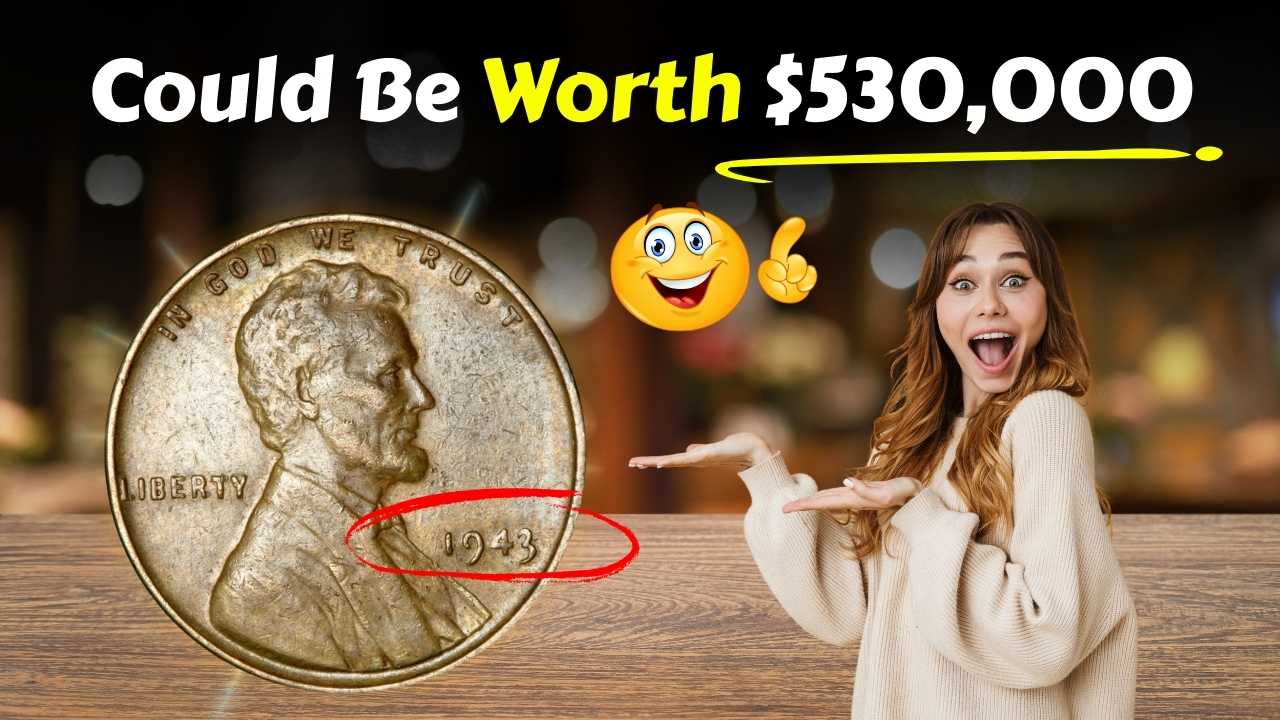
It might sound unbelievable, but a penny sitting in someone’s old change jar could be worth a small fortune. The 1943 Lincoln penny, minted during World War II, is one of the rarest and most fascinating coins in U.S. history. While most pennies are worth only a cent, a rare version of this 1943 coin has been known to sell for as much as $530,000 at auction. And the best part? A few of them may still be out there, hidden in everyday circulation.
The Story Behind the 1943 Penny
In 1943, the United States Mint faced a critical copper shortage because the metal was needed for wartime supplies like shell casings and electrical wiring. To conserve copper, the Mint produced pennies from zinc-coated steel instead, giving them a shiny, silver-like appearance.
But a small mistake created history some pennies were accidentally struck on leftover copper planchets from 1942. These rare copper 1943 Lincoln pennies are the ones collectors are desperate to find today.
Why It’s Worth So Much
The rarity of the 1943 copper penny makes it incredibly valuable. Experts estimate only a few dozen exist, with each one commanding staggering prices when sold. Condition also plays a major role coins with little wear and sharp detail fetch higher amounts.

At auction, a pristine 1943 copper penny has reached over half a million dollars. Even those in slightly lower grades can still be worth tens or hundreds of thousands.
| Year | Metal Type | Estimated Value (High Grade) |
|---|---|---|
| 1943 | Copper (Error) | Up to $530,000 |
| 1943 | Steel (Normal) | 10–50 cents |
How to Spot One
So how can you tell if you’ve stumbled upon one of these treasures? Here’s what to look for:
- Check the Date: Make sure it says “1943.”
- Test the Metal: Regular 1943 pennies are steel and will stick to a magnet. A real copper version won’t.
- Examine the Color: Copper pennies have the typical reddish-brown tone, unlike the silvery steel version.
- Look at the Condition: The better preserved, the higher the value.
If you think you’ve found one, don’t rush to sell it at a local shop consult a trusted coin expert or grading service to verify authenticity.
Hidden Treasures Still in Circulation
Believe it or not, some of these rare pennies may still be sitting in old coin jars, inherited collections, or even tucked away in piggy banks. Stories have surfaced of lucky people discovering them in the most ordinary places. That’s why coin enthusiasts always recommend double-checking your change—because you never know what might turn up.

Tips for Collectors and Hobbyists
- Start by searching through loose change and older coin rolls.
- Visit coin shows, shops, or reputable online sellers but watch out for counterfeits.
- Learn from resources like the “Red Book” or join a coin club to connect with experts.
- Remember, even if you don’t strike gold with a 1943 copper penny, coin collecting can be a fun and rewarding way to connect with history.
The Bottom Line
The 1943 copper Lincoln penny is proof that even the smallest coin can hold immense value. With a sharp eye and a little luck, you could discover a hidden piece of history worth hundreds of thousands of dollars. So the next time you check your change, take a closer look you might just be holding a fortune in the palm of your hand.