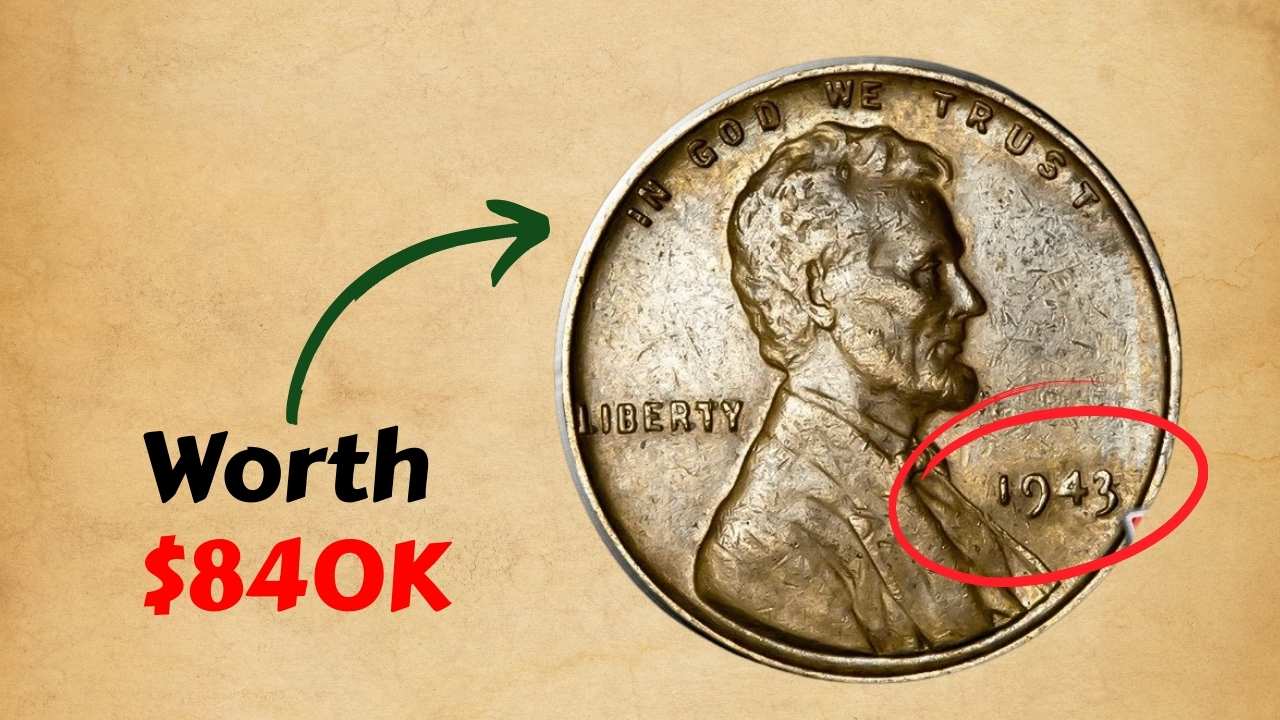
When it comes to rare U.S. coins, few are as fascinating as the Lincoln Wheat Penny that has stunned collectors by selling for as much as $840,000. What makes it even more exciting is that some of these rare coins could still be sitting unnoticed in everyday circulation.
Let’s take a closer look at why this penny is so valuable, how it came into existence, and what to do if you think you might have one.
Why Is the Lincoln Wheat Penny So Special?
The Lincoln Wheat Penny was first minted in 1909 to celebrate the 100th anniversary of Abraham Lincoln’s birth. For decades, it was one of the most common coins in circulation, but a few unusual variations have become legendary among collectors.
One of the rarest is the 1943 Bronze Lincoln Wheat Penny. During World War II, copper was needed for military supplies such as ammunition and wiring. To save resources, the U.S. Mint switched to using zinc-coated steel for pennies in 1943.
However, by mistake, a few leftover bronze (copper-based) blanks were struck with 1943 dies. The result? A tiny number of bronze 1943 pennies entered circulation completely by accident.
How Rare Is It?
Extremely rare. Only a handful of these coins are known to exist today, and each one attracts huge attention whenever it surfaces.
In fact, in 2021, a 1943-D Bronze Lincoln Wheat Penny in Mint State 64 condition was auctioned for an astonishing $840,000. Even those in lower grades are worth hundreds of thousands of dollars, making this coin one of the most sought-after pieces in U.S. numismatic history.
How to Tell If You Have One
If you think you’ve stumbled upon a 1943 penny that looks copper instead of silvery steel, here are a few simple checks:
- Magnet Test: A real 1943 bronze penny will not stick to a magnet. Steel versions will.
- Check the Date and Mint Mark: The rarest version carries a 1943 date with a “D” mint mark, showing it was struck at the Denver Mint.
- Authentication: Because counterfeits are common (many are just copper-coated steel coins), the only way to be sure is to have it verified by a professional grading service like PCGS or NGC.
Why Collectors Go Crazy for It
This coin is more than just a piece of metal it’s a piece of history. Born out of a wartime mistake, the 1943 Bronze Wheat Penny reflects a period when every ounce of copper was crucial for America’s military efforts. Its rarity, story, and connection to history make it one of the most valuable coins ever struck.
Final Thoughts
The Lincoln Wheat Penny is a coin that millions of Americans once carried in their pockets without a second thought. Yet, one special variation the 1943 Bronze Wheat Penny has turned into a collector’s dream, worth nearly a million dollars.
So next time you come across an old penny, don’t dismiss it. That ordinary-looking coin might just be a once-in-a-lifetime treasure.
FAQs
Q: What is the Lincoln Wheat Penny worth $840,000?
A: The 1943-D Bronze Lincoln Wheat Penny, an accidental minting error, sold for $840,000 at auction.

Q: How can I check if I have one?
A: Try the magnet test (bronze won’t stick). But always confirm with professional authentication.
Q: Are all 1943 pennies valuable?
A: No. Most 1943 pennies are steel and worth only a few cents. Only the bronze error versions are extremely valuable.
Q: Should I get my penny graded?
A: Absolutely. Professional grading ensures authenticity and gives the coin its proper market value.