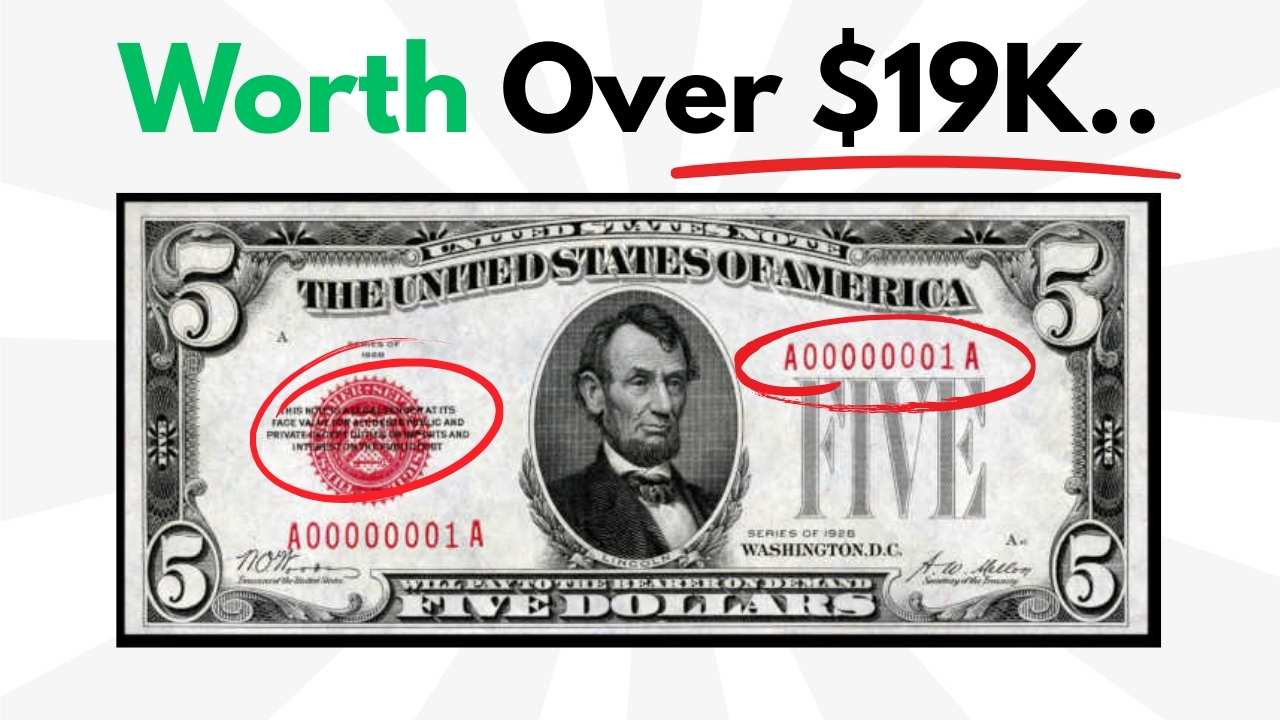
Most of us rarely give a second thought to the cash in our wallets. We spend it, fold it, or stash it away. But what if one of those ordinary-looking $5 bills could actually be worth over $19,000?
Believe it or not, certain rare $5 bills have caught the attention of collectors and investors alike, fetching jaw-dropping prices. These aren’t fictional treasures they’re real bills, sometimes still floating around in circulation. You could be holding one right now and not even realize its worth.
In this article, we’ll break down why some $5 bills are so valuable, how to spot them, and what makes collectors willing to pay top dollar.
Why Some $5 Bills Are Special
The $5 bill has been part of American currency for well over a century, featuring famous figures like Abraham Lincoln and intricate designs that have changed over time. While most bills are ordinary and worth their face value, some become rare collectibles due to unique features, printing quirks, or historical significance.
Collectors look for these rare bills because they combine history, rarity, and condition, making them both a collectible and an investment.
What Makes a $5 Bill Valuable?
Not every old $5 bill is worth thousands, but certain characteristics can dramatically increase its value:
- Star Notes: Bills with a small star symbol at the end of the serial number are replacements for misprinted bills and are rarer.
- Low Serial Numbers: Serial numbers like 00000001 or repeating patterns (e.g., 11111111) are highly sought after.
- Errors in Printing: Bills with misprints, misaligned prints, or missing features can be extremely rare.
- Old Series: Bills from older series, especially pre-1929 notes, can fetch thousands if in good condition.
- Condition: Crisp, uncirculated bills are worth far more than worn or damaged ones.
Examples of $5 Bills Worth Thousands
| Type | Serial or Feature | Reason for Value | Approximate Value |
|---|---|---|---|
| 1928 Federal Reserve Note | Star note | Replacement bill, rare | $2,000–$5,000 |
| 1934 Series $5 | Low serial number | Collector favorite | $1,500–$4,000 |
| 1950s $5 | Printing error | Misaligned design | $5,000–$10,000 |
| Modern $5 | Repeating serial numbers | Collector pattern | $500–$2,000 |
| Extremely rare 1899 $5 Silver Certificate | Star note + uncirculated | Historical significance | $19,000+ |
How to Check Your $5 Bills
You don’t need specialized tools to start identifying potentially valuable bills. Just follow these steps:
- Check the Serial Number: Look for star notes, very low numbers, repeating or unique patterns.
- Inspect for Errors: Blurred prints, misaligned ink, or missing features are important clues.
- Examine Condition: Bills without folds, tears, or marks are far more valuable.
- Series Date: Older bills, especially pre-1929, are often more collectible.
If a bill looks unusual, don’t spend it. Store it in a protective sleeve and consider professional appraisal.

Where Can You Find Valuable $5 Bills?
Valuable $5 bills aren’t hidden in vaults alone. People have found them:
- In rolls of bills from banks
- In wallets of family members or old collections
- At auctions, estate sales, or flea markets
- Occasionally, even in regular change
The key is knowing what to look for and taking a closer look at bills that appear ordinary at first glance.
Don’t Attempt DIY Cleaning
Like coins, never try to clean or alter old bills. Collectors prize bills in their original state, and cleaning or damaging them can drastically reduce their value. Handle them gently and store them in protective sleeves.
Why Collectors Pay Thousands
Collectors often see rare $5 bills as investments and pieces of history. Bills in pristine condition, rare star notes, and error notes tend to increase in value over time.
Some collectors focus on specific series or serial numbers, while others appreciate the historical story behind each bill. When a rare $5 bill completes a collection, buyers are ready to pay thousands to acquire it.
FAQs
1. How do I know if my $5 bill is worth over $19,000?
Check the serial number, series date, and condition. Star notes, low serial numbers, or printing errors could indicate a high-value bill. Professional appraisal is recommended.
2. Where can I sell a rare $5 bill?
Coin and currency dealers, collectors, and specialized auctions are your best options. Always get an expert evaluation first.
3. What is a star note?
A star note has a small star at the end of its serial number, indicating it replaced a misprinted bill. Star notes are rare and highly collectible.

4. Are all old $5 bills valuable?
No. While older bills have historical interest, only those with rare features, errors, or exceptional condition command significant value.
5. Can modern $5 bills be valuable?
Yes, especially if they have unique serial numbers, star symbols, or printing anomalies. Collectors look for patterns that stand out.
Final Thoughts
It’s remarkable to think that an everyday $5 bill could be worth over $19,000. Hidden among ordinary cash, these bills are small treasures waiting to be discovered.
Whether you’re a serious collector or just curious, taking the time to examine your cash can be surprisingly rewarding. A few minutes of attention could uncover a tiny fortune hiding in plain sight.
Next time you pull a $5 bill from your wallet, give it a closer look you might be holding more than just five dollars.