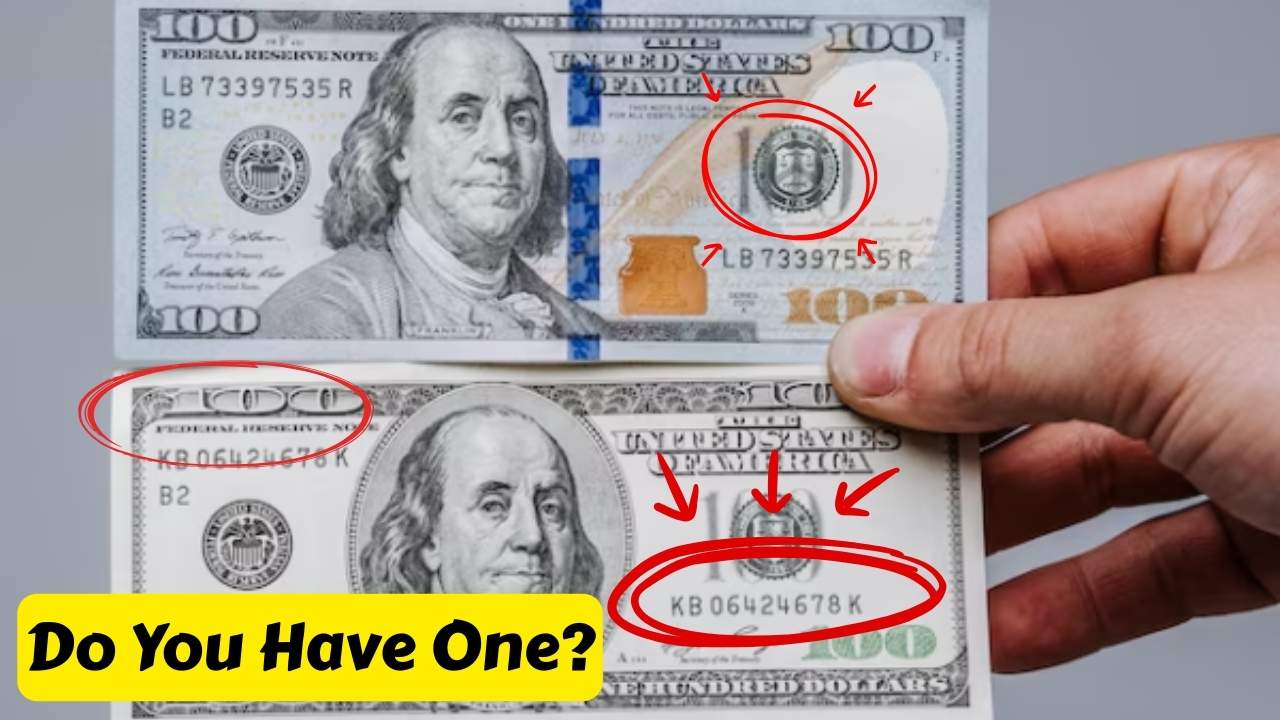
These 2013 $100 Bills: That $100 bill sitting in your wallet could be worth far more than its face value. The 2013 $100 bill featuring Benjamin Franklin may look like any other, but certain rare printing mistakes have turned some of these notes into collector’s treasures. In fact, a few have sold at auctions for as much as $500,000. If you happen to own one, you could be holding a hidden fortune.
The Star Note Surprise
The most valuable 2013 $100 bills are known as “star notes.” These bills include a small star symbol in their serial number, meaning they were printed as replacements for damaged notes. While star notes are already considered uncommon, the 2013 series became famous for a major printing error: some star notes were released with duplicate serial numbers.
Collectors highly prize these “2013 Star Note Errors.” In 2024, one such note sold for $456,000 because of its unique serial number and flawless condition. If you spot a star in the serial number especially if it begins with “L” or “B” you might have a bill worth thousands.
| Note Type | Key Feature | Estimated Value |
|---|---|---|
| Star Note (L Series) | Star in Serial, Low Print Run | $1,000 – $500,000 |
| Standard Note | No Star, Common | $100 |
The Duplicate Serial Number Error
Normally, every bill has a unique serial number like a fingerprint. But in 2013, the Federal Reserve accidentally printed two separate batches of star notes with the same serial numbers. This rare mistake created about 6.4 million duplicate bills, most of which came from the New York (B) and San Francisco (L) districts.
That’s why collectors are actively searching for these notes. If your bill’s serial number falls within the ranges below, it could be worth thousands:
| Error Type | Serial Number Range | Estimated Value |
|---|---|---|
| L Series Duplicate | L00000001* – L03200000* | $500 – $10,000 |
| B Series Duplicate | B00000001* – B03200000* | $500 – $15,000 |
Other Features to Check
Apart from star notes and duplicate serial numbers, you should also examine the security features introduced in the 2013 $100 bill. These include a 3D blue security ribbon and a color-changing bell in the inkwell.
Some bills with printing errors like misaligned ribbons, smudged ink, or other flaws can fetch even higher values. Also, condition matters. A crisp, uncirculated note is worth far more than one that has been heavily used. Even so, a circulated star note from the error batches may still bring in $500 or more.
Why Collectors Want These Bills
Currency collecting, also called notaphily, has been gaining popularity. The 2013 $100 bill is especially exciting to collectors because it’s both modern and rare. Many people never think to examine their cash closely, which means error notes are often hiding in wallets, cash drawers, or old envelopes.

What makes them even more desirable is the story behind the error. Despite advanced printing technology, the U.S. Bureau of Engraving and Printing admitted the mistake turning these bills into a unique piece of financial history. Demand continues to rise, and auction houses report strong prices for high-grade examples.
How to Check and Sell Your Bill
- Inspect your $100 bills – Look for the star symbol and compare the serial number with the error ranges.
- Protect it – Don’t fold or spend the bill. Store it flat in a protective currency sleeve.
- Get it authenticated – Take the note to a professional grading service such as PCGS or PMG.
- Choose where to sell – While online platforms like eBay are an option, serious collectors often pay more through reputable auction houses.
Your Cash Could Be a Hidden Treasure
The 2013 $100 bill proves that everyday money can sometimes be worth a small fortune. Thanks to star notes and duplicate serial number errors, collectors are willing to pay thousands or even hundreds of thousands for the right bill.
So, take a closer look at the $100 bills in your wallet, piggy bank, or old stash of cash. You might just discover that one of them is worth far more than $100 and that hidden treasure could be sitting right in your hands.