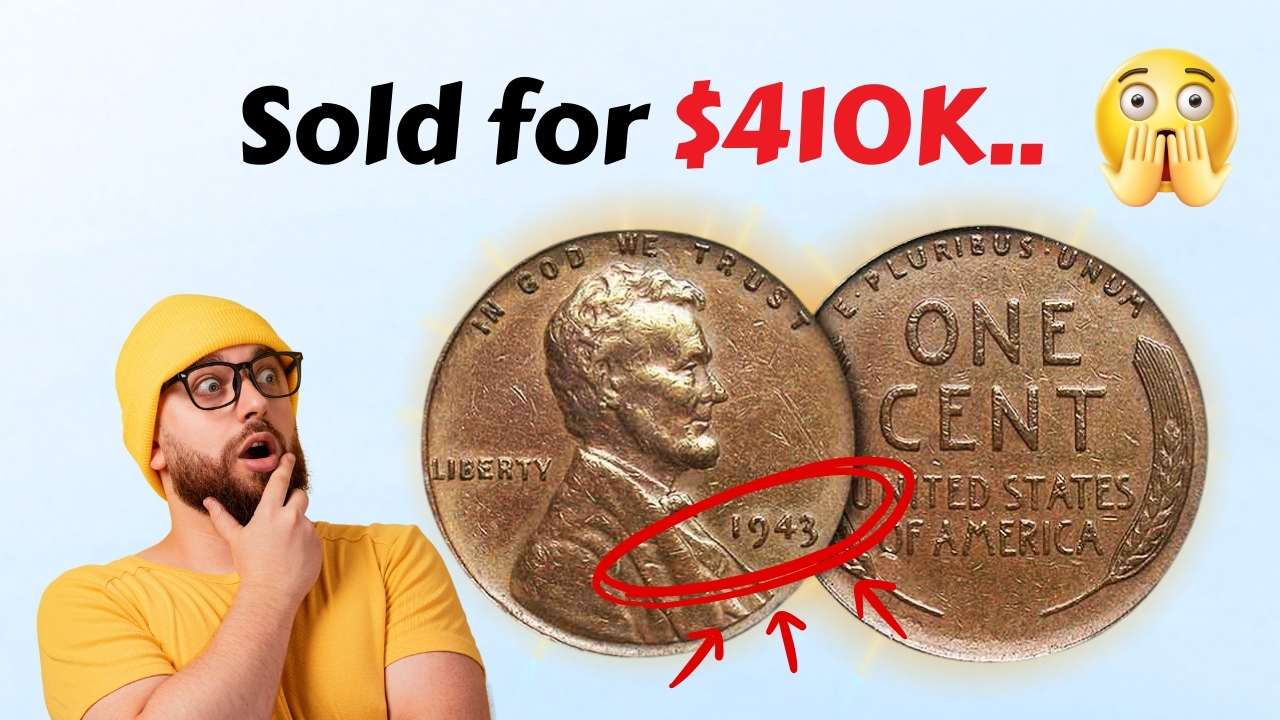
Most of us don’t think twice about pennies. They’re small, often tossed in jars, or left behind as loose change. But what if that ordinary-looking penny in your pocket was worth hundreds of thousands of dollars? That’s exactly what happened with a rare 1943 bronze penny that recently sold for an astonishing $410,000.
Let’s dive into the story behind this coin, why it’s so valuable, and how you could check if you might have one hiding in your collection.
The Story Behind the 1943 Bronze Penny
In 1943, World War II was in full swing, and copper was desperately needed for ammunition and military equipment. To save resources, the U.S. Mint stopped using copper for pennies and instead produced them from zinc-coated steel.
But here’s where the magic happened: a few leftover copper blanks from 1942 accidentally slipped into the presses. These mistakes resulted in a handful of 1943 pennies being struck in bronze instead of steel.
The result? A coin that was never meant to exist and one of the rarest in U.S. history.
Why It’s Worth a Fortune
The rarity alone makes the 1943 bronze penny incredibly valuable. Experts estimate that only about 15 to 20 of these coins exist today. And since collectors always chase “error coins” and one-of-a-kind pieces, demand pushes the price sky-high.
Condition matters too. The better preserved the coin, the more money it can bring. That’s why one pristine example fetched over $410,000 at auction transforming a humble cent into a small fortune.
Could You Have One?
It might sound impossible, but rare coins like this sometimes slip through the cracks and end up in collections, coin jars, or even circulation years ago. While the odds are slim, people still occasionally discover these valuable pennies in the most unexpected places.
Here’s how you can check if your 1943 penny is special:
- Do the Magnet Test: Most 1943 pennies are steel and will stick to a magnet. A bronze one won’t.
- Check the Color: Steel cents look grayish, while bronze ones have a reddish-brown copper tone.
- Look Closely at the Details: If you’re unsure, a coin dealer can professionally verify it.
Other Valuable Pennies to Watch Out For
The 1943 bronze penny isn’t the only one worth big money. Collectors also pay attention to:
- 1909-S VDB – A highly sought-after first-year Wheat Penny.
- 1914-D Lincoln Cent – Rare because so few were minted.
- 1955 Doubled Die – Famous for its dramatic doubled lettering.
Each of these coins can be worth hundreds or even thousands of dollars depending on condition.
Why This Matters
The 1943 bronze penny proves that sometimes the smallest things can carry incredible value. A simple mistake at the Mint turned a one-cent coin into a collector’s dream. And while most people spend their pennies without a second thought, a lucky few have discovered treasures hiding in plain sight.

So the next time you come across a penny from the 1940s, don’t ignore it. Who knows? That tiny coin in your hand might just be worth more than your car or even your house.
FAQs
Why did the 1943 bronze penny sell for $410,000?
Because it’s an extremely rare Mint error only a few exist making it highly valuable to collectors.
How can I tell if my 1943 penny is bronze or steel?
Use a magnet. Steel pennies will stick, bronze ones won’t.
Are there still rare pennies in circulation?
Yes, though very rare. Some may still be hiding in old jars, collections, or inherited coin boxes.
Where can I sell a rare penny?
Professional coin dealers, coin shows, or reputable auction houses are the best options.