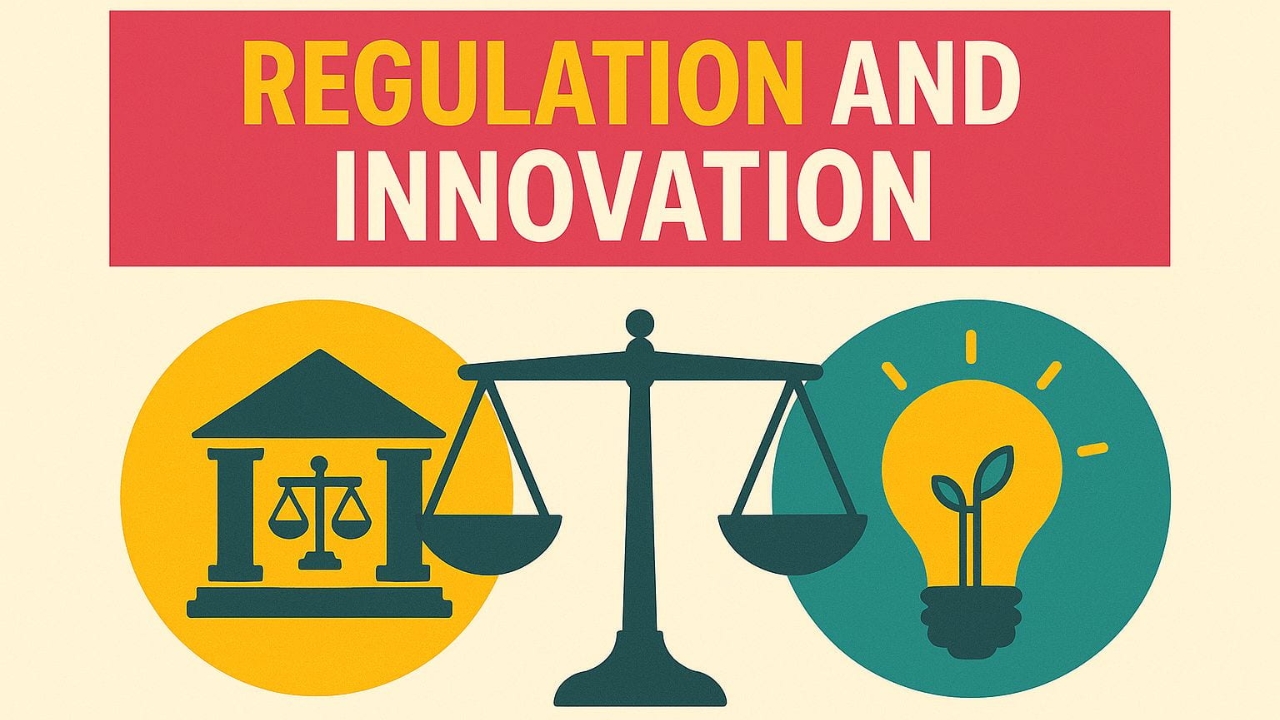
Technology Regulation vs Innovation: The rapid pace of technological advancement has created a defining challenge for policymakers in 2026: how to regulate innovation without slowing it down. From artificial intelligence and cloud computing to blockchain and biotechnology, new technologies are reshaping industries faster than traditional regulatory systems can adapt. Governments are now faced with a delicate balancing act—protecting public interests while allowing innovation to thrive.
This tension between regulation and innovation is not a conflict to be resolved, but a dynamic relationship to be managed. The future of digital transformation depends on how effectively this balance is achieved.
The Growing Need for Technology Regulation
As digital technologies become deeply integrated into everyday life, the risks associated with them have grown significantly. Issues such as data privacy, cybersecurity threats, algorithmic bias, and market monopolies have highlighted the need for clear and enforceable regulations.
Frameworks like the General Data Protection Regulation introduced by the European Union have set global standards for data protection. Similarly, the Digital Markets Act aims to ensure fair competition in the digital economy by regulating large technology platforms.
Countries such as India and United States are also developing policies to address emerging challenges, from AI governance to platform accountability. These regulations are designed to create a safer and more transparent digital environment.
However, regulation must evolve alongside technology. Static rules can quickly become outdated, making flexibility and adaptability essential components of modern policymaking.
Innovation as the Engine of Digital Transformation
Innovation remains the driving force behind economic growth and technological progress. Startups, research institutions, and global tech companies are continuously pushing the boundaries of what is possible.
Companies like Google, Amazon Web Services, and Microsoft are investing heavily in emerging technologies, enabling new applications across industries. These innovations are transforming sectors such as healthcare, finance, education, and manufacturing.

Digital transformation is not just about adopting new tools—it is about rethinking processes, improving efficiency, and creating new value. For businesses, the ability to innovate quickly can be a key competitive advantage.
From a DevOps perspective, innovation is closely linked to agility. Continuous integration and continuous deployment practices allow teams to experiment, iterate, and deliver solutions at a rapid pace. This speed is essential in a market where technology evolves constantly.
The Tension Between Control and Creativity
The relationship between regulation and innovation is often seen as a trade-off. Strict regulations can limit experimentation and slow down the development of new technologies. On the other hand, a lack of oversight can lead to misuse, security risks, and loss of public trust.
One of the key challenges is finding the right level of control. Policies must be robust enough to address risks but flexible enough to accommodate new developments. This requires a shift from rigid rule-making to adaptive governance models.
Regulatory sandboxes have emerged as a practical solution. These controlled environments allow companies to test new technologies under regulatory supervision, enabling innovation while managing risks. This approach has been particularly effective in sectors like fintech and healthcare.
Another important concept is risk-based regulation. By focusing on the potential impact of technologies rather than applying uniform rules, policymakers can create more targeted and effective frameworks.
Embedding Regulation into DevOps and Engineering Practices
In 2026, the integration of regulation into technology workflows has become a critical aspect of digital transformation. DevOps teams are increasingly incorporating compliance and governance into their pipelines, ensuring that applications meet regulatory requirements from the outset.
This approach, often referred to as policy-as-code, allows organizations to automate compliance checks and enforce standards consistently. Infrastructure as Code tools are used to define and manage environments in a way that aligns with regulatory guidelines.

Security and privacy are also embedded into the development lifecycle through DevSecOps practices. Automated testing, vulnerability scanning, and real-time monitoring help identify and address issues before they become critical.
Auditability and transparency are key requirements. Systems must be designed to provide clear records of how decisions are made, enabling organizations to demonstrate compliance and accountability.
By integrating regulation into engineering workflows, organizations can reduce the friction between compliance and innovation.
Global Differences and the Need for Harmonization
One of the biggest challenges in technology regulation is the lack of global consistency. Different countries have different priorities, leading to a fragmented regulatory landscape.
For example, the China emphasizes data sovereignty and state control, while the United States focuses on market-driven innovation. The European Union, on the other hand, prioritizes user rights and ethical considerations.
These differences create challenges for multinational organizations, which must navigate multiple regulatory frameworks. Compliance becomes more complex and costly, potentially slowing down innovation.
Efforts are being made to harmonize regulations through international cooperation and standards. While complete alignment may not be achievable, greater coordination can reduce fragmentation and support global innovation.
The Future of Policy Design: Agile and Collaborative
The future of technology regulation lies in agility and collaboration. Policymakers are increasingly engaging with industry experts, researchers, and stakeholders to design more effective frameworks.

Public-private partnerships are playing a key role in this process. By working together, governments and organizations can share knowledge, identify risks, and develop solutions that benefit society as a whole.
Data-driven policymaking is also gaining importance. By analyzing real-world data, regulators can better understand the impact of technologies and adjust policies accordingly.
Education and awareness are essential components of this approach. As technology becomes more complex, both policymakers and the public must have a clear understanding of its implications.
Ultimately, the goal is to create a regulatory environment that supports innovation while safeguarding public interests.
Conclusion
The balance between technology regulation and innovation is one of the most critical challenges of the digital age. In 2026, it is clear that neither can exist in isolation. Effective regulation provides the foundation for trust and stability, while innovation drives progress and growth.
By adopting flexible, risk-based, and collaborative approaches, policymakers can create frameworks that enable sustainable digital transformation. For organizations, integrating compliance into development processes is key to navigating this evolving landscape.
The path forward requires continuous adaptation and cooperation. As technology continues to evolve, so too must the policies that govern it. In this balance lies the future of a digital world that is both innovative and responsible.
