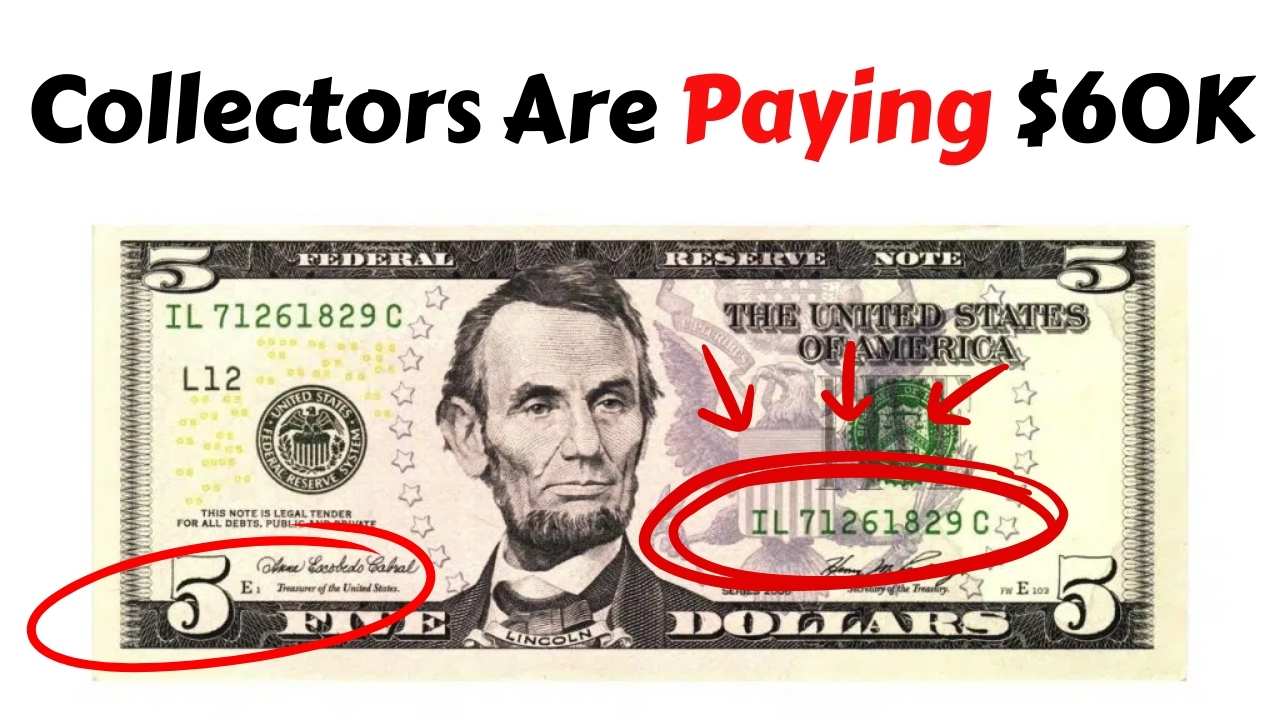
Rare $5 Star Note: Imagine grabbing a $5 bill from your wallet only to find out it’s not just worth a latte it could actually be worth as much as a luxury car. That’s the surprising reality behind a rare kind of bill called a star note, and collectors are shelling out tens of thousands of dollars to get their hands on one.
One particular $5 star note from 1934 has sold at auction for up to $60,000, and experts believe there are still some floating around in people’s old collections, shoe boxes, or even pockets. Here’s what makes these bills so special and how you might be able to spot one.
What Exactly Is a Star Note?
Star notes aren’t just ordinary currency. They’re produced by the U.S. Bureau of Engraving and Printing whenever a regular bill is damaged or misprinted during production. Instead of reusing the same serial number, the government replaces it with a new one that ends in a small star symbol.
That little star is what makes the note unique. The $5 star note from 1934 is especially prized because of its limited print run only about 320,000 bills were ever made, compared to the millions of standard bills. That scarcity, combined with condition and serial number quirks, is what drives the jaw-dropping prices.
Why Some $5 Star Notes Are Worth Thousands
Not every star note will fetch a fortune, but certain qualities can send their value soaring:

- Rarity: Only a fraction of these bills were printed, making them incredibly scarce.
- Serial Numbers: Notes with repeating digits, ladders (12345678), or especially low numbers are worth far more.
- Condition: A crisp, uncirculated note with no folds, stains, or tears can be worth exponentially more than one in poor shape.
- Historical Factor: Being from 1934 adds another layer of desirability for serious collectors.
To give you an idea of just how wide the market is, here are some rough value estimates:
| Denomination | Series Year | Print Run Size | Estimated Value |
|---|---|---|---|
| $5 | 1934 | 320,000 | $500 – $60,000 |
| $1 | 2017 | 640,000 | $10 – $75 |
| $2 | 1928 | <100,000 | $12,000 – $65,000 |
| $50 | 1950 | 180,000 | $800 – $6,500 |
A Lucky Discovery Story
In 2024, a collector in Texas stumbled across a stack of old bills that belonged to his late grandfather. Tucked inside was a 1934 $5 star note, in remarkably good condition. After getting it appraised and verified, the note went on to sell for nearly $55,000 at auction.
Stories like this fuel the excitement reminding us that hidden treasures can sometimes sit unnoticed in a drawer, an attic, or even your everyday wallet.
How to Check If You Have One
Curious if you’ve got a fortune in your pocket? Here’s what to do:
- Look for the star symbol – It will be at the end of the bill’s serial number.
- Check the series year – For the big-money find, 1934 is the one to watch.
- Inspect the condition – Unfolded, crisp bills are far more valuable.
- Study the serial number – Collectors love unique sequences like 00000045, 88888888, or ladders like 12345678.
You can also use currency tracking websites like MyCurrencyCollection.com or consult a coin and currency dealer for a professional appraisal.

Where to Sell If You Strike Gold
If you think you’ve found a valuable star note, don’t spend it like regular cash. Instead:
- Get it authenticated by a trusted grading service like PCGS or PMG.
- For lower-value notes, platforms like eBay or specialized collector forums work fine.
- For higher-value pieces, consider a numismatic auction house where serious collectors compete, often driving prices up.
Final Thoughts
The idea that a plain-looking $5 bill could secretly be worth $60,000 is both thrilling and eye-opening. Whether you’re a casual spender or a budding collector, it’s worth taking an extra moment to glance at your cash. That tiny star in the corner could transform pocket change into a once-in-a-lifetime payday.
So next time you get change back at the store, check closely you just might be holding a hidden piece of history.