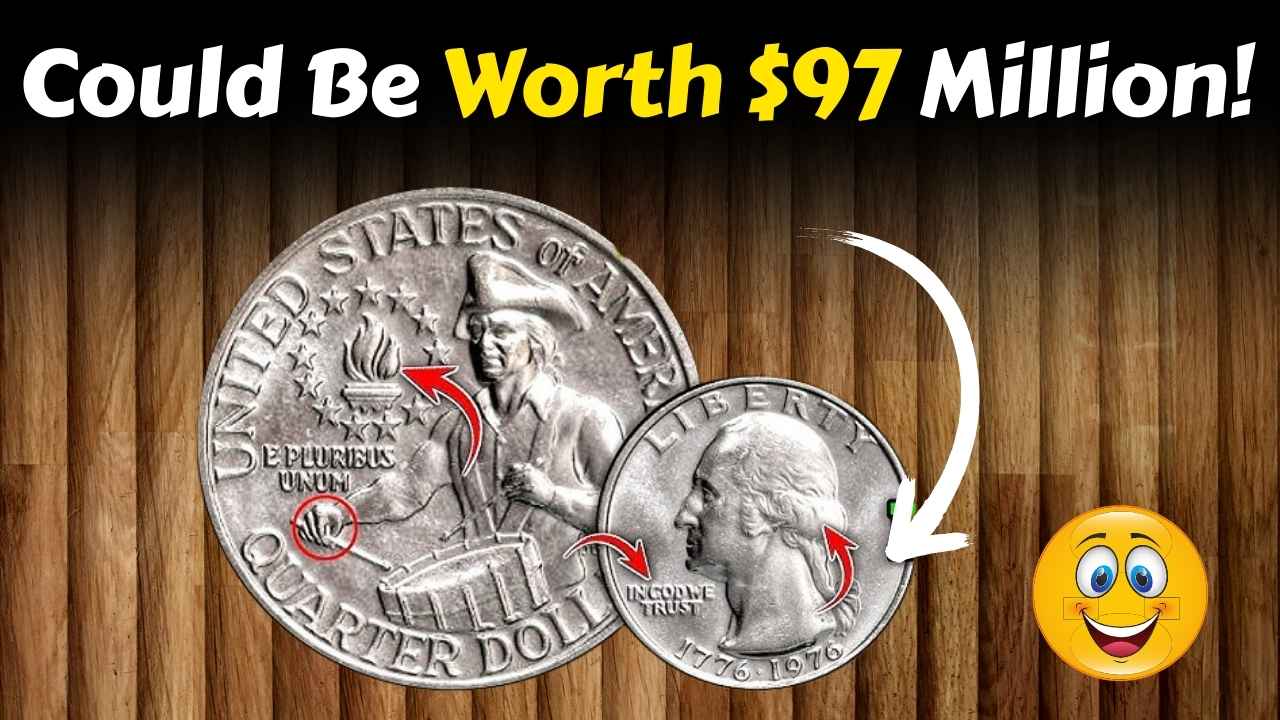
1976 Bicentennial Quarters: If you’ve ever emptied your pockets and noticed a quarter with a drummer on the back, you’ve held a little piece of American history. That coin is the 1976 Bicentennial quarter, minted to celebrate the United States’ 200th birthday. While most of these coins are worth only 25 cents, a few rare versions have collectors buzzing some selling for thousands, and one legendary rumor even suggests a coin worth nearly $100 million. So, what makes these quarters so special?
Why the Bicentennial Quarter Stands Out
In 1976, the U.S. Mint issued a special series of coins to mark the nation’s bicentennial. Instead of the usual eagle on the reverse, the quarter featured a Revolutionary War–era drummer with a torch and 13 stars symbolizing the original colonies. This patriotic design, created by Jack L. Ahr, was struck for just two years, making it a one-of-a-kind series in American coinage.
Are All 1976 Quarters Valuable?
The short answer: no. Billions of Bicentennial quarters were produced, meaning most are still only worth face value. However, collectors look for a few specific variations that are rare and therefore valuable:
- Special silver issues struck at the San Francisco Mint
- Proof versions with mirror-like finishes
- Error coins where mistakes during minting created unusual features
- High-grade uncirculated coins that have survived in pristine condition
The Infamous “$97 Million Quarter”
Collectors often whisper about a Bicentennial quarter supposedly valued at $97 million. While such a price tag sounds unbelievable, it comes from the idea that a flawless, silver-struck coin with a unique error could be essentially priceless to the right buyer. In reality, no public sale has confirmed such a figure, but the story adds to the coin’s mystique.
The Most Valuable Bicentennial Quarters
Here are a few standout examples that have fetched impressive prices:
| Coin Type | Estimated Value | Why It’s Valuable |
|---|---|---|
| 1976-S Silver Proof (Deep Cameo) | Up to $13,000 | Brilliant mirror finish, rare collector’s piece |
| 1976-D Double Die Quarter | Around $6,000 | Minting error doubling the lettering |
| 1976-S Silver Uncirculated | About $4,000 | High-grade silver version, never circulated |
| 1976 “No Mint Mark” Error | Possibly millions | Rumored unique error coin, one-of-a-kind |
How to Tell If You Have One
If you’ve got a Bicentennial quarter at home, here are a few ways to check if it might be valuable:
- Look for mint marks: “S” for San Francisco, “D” for Denver, and none for Philadelphia.
- Check the metal: Silver versions are heavier and produce a ringing sound when dropped.
- Inspect the details: Doubling on the lettering or unusual markings could signal an error coin.
- Condition matters: Coins that look untouched and shiny (uncirculated) are worth more.
If you think you’ve found something special, the best step is to have it graded by a professional coin service.
Why Collectors Pay So Much
Coin values usually come down to three main factors:
- Rarity – The fewer examples exist, the higher the demand.
- Condition – A flawless coin always commands a premium.
- Errors – Mint mistakes are rare and fascinating, making them highly collectible.
Should You Start Collecting?
Collecting coins is more than just a hobby it’s a way to hold history in your hands. You don’t need to be rich to start; simply checking your spare change can be the first step. Who knows? That ordinary-looking quarter in your wallet could turn out to be worth far more than 25 cents.
Final Thoughts
The 1976 Bicentennial quarter may not make everyone rich, but it remains a timeless keepsake from America’s 200th birthday. While most are still just pocket change, rare varieties can be worth thousands or even spark legends of million-dollar coins. Next time you come across one, take a closer look you just might be holding a hidden treasure.